In three-cushion billiards, as in all sports, it is very important to know the basic concepts of the game, the fundamentals, and the appropriate technique in order to advance in understanding more complex aspects of the game.
Three-Cushion Billiards Fundamentals
How to Play Three-Cushion Billiards: Basic Rules
Three balls are used on a pocketless table: white, yellow, and red. Each player is assigned a cue ball (white or yellow). To score one point, your cue ball must contact both object balls and make at least three cushion contacts before touching the second object ball.
You do not have to contact three different cushions or hit an object ball first. You can play rail-first, and the same cushion may count more than once. What matters is the number of cushion contacts before reaching the second object ball.
Two examples: the order of contacts
✓ Valid carom: 1 point
The white cue ball reaches the red ball after three cushion contacts.
✗ Invalid carom: 0 points
The white cue ball reaches the red ball too soon, after only two cushion contacts.
Schematic showing the order of contacts, not a path drawn to scale. The white ball is the cue ball in both examples.
To practice, try to identify the order of contacts before playing a shot. You can draw your shot in BilliNote or start with the free three-cushion billiards course for beginners. If you already have experience, choose lessons for your level.
The Table, the Balls, and the Cue
We present some measurements and important aspects of the playing equipment in three-cushion billiards, such as the table, the balls, and the cue tip (botana or casquillo).
Body, Bridge, Grip, Stroke, and Execution
Correct body position, how to stand, appropriate distance from the cue ball (ball 1), how to make a firm and stable bridge, the different cue grip positions, stroke or limaje, and execution.
How to Apply Spin and Its Angles
We explain how to apply different spins and the reflection angles they produce.
How to Execute Ball Hits
We explain how to aim with the cue and execute the most important ball hits and the reflection angles they produce.
Advanced Three-Cushion Billiards Fundamentals
- Spin and Angles in Billiards: The 1.5 System
 A billiards lesson explaining spin, its angles, and how to create your own diamond systems for playing billiards, based on basic principles such as the law of reflection (1/2 fraction or Halves) and the two-thirds theory (two thirds of beyond)
- How Hit Thickness Affects Ball Control in Billiards
 Everything you need to know to control the cue ball (cue ball control) after hitting another ball in billiards
- The Hidden Values of the Halves System
 Discover the secret values and unlock the full power of the Halves System in three-cushion billiards.
- The Other Half of the Halves System
 The lesser-known half of the Halves System, playing off the long rail, but departing from the short rail. This is a fundamental concept in three-cushion billiards that you must know and master!
- Five Basic Principles of Three-Cushion Billiards
 We reveal one of the most important secrets of three-cushion billiards: how to visualize the path of the cue ball.
- How to Triangulate in Three-Cushion Billiards
 One of the secrets of a good player lies in understanding how triangles help us visualize the path of the ball.
- The Shot Line, Departure Tangent and Hit Thickness in Billiards
 Aim line, departure tangent, and hit thickness in three-cushion billiards; and the close relationship they share.
- System 007: Turn Complicated Shots into Surprising Caroms | Three-Cushion Billiards 2025
 System 007 is a revolutionary method designed to transform difficult shots into surprising caroms
- Three Keys to a Better Tickie: The Curved Tickie System
 I am the Maestro del Billar, and today I am going to reveal a technique that will expand your possibilities in three-cushion billiards: The “TIKI with Curve” System
- The Origins of the Base 50 System in Three-Cushion Billiards
 The Origin of the Base 50 System has been a mystery… Today we are going to unearth that secret with the quality and precision of Maestro del Billar.
- Learning Billiards with Willie Hoppe and Artificial Intelligence
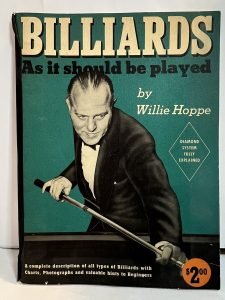 A complete guide to the fundamentals of billiards. It highlights the importance of mastering the basics, such as stance, grip, bridge, and stroke, before moving on to more advanced techniques.
- Learning Billiards with Roger Conti and Artificial Intelligence
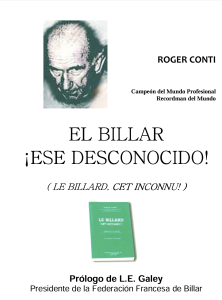 A dialogue between a master and a student, covering a wide range of stroke techniques, such as draw, stop, follow, and rail shots.
- Sports Psychology for Billiards Players
 We know that many of the difficulties in billiards have a mental origin. But, what if you could transform those internal obstacles into opportunities for success?
- Three-Cushion Billiards Lessons with Semih Saygıner
 A compilation of master classes by the great master Semih Sayginer covering various aspects of three-cushion billiards
- Three-Cushion Billiards Lessons with Daniel Sánchez
 A compilation of master classes in three-cushion billiards by multiple world champion Daniel Sanchez, covering various aspects of the game.
- Why the Base 50 Formula Works: Aiming Point = Starting Value − Target Value
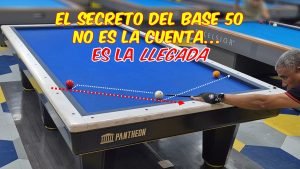 For years, the same question haunted me: who invented the numbering of the Base 50 System for playing three-cushion billiards… and why does that formula work?
- Free Three-Cushion Billiards Course
 The BEST thing about this Three-Cushion Billiards Course is that it is FREE and your best option to learn or improve your three-cushion billiards level. The content of this course is being progressively updated. FREE COURSE · 1/4 · BEGINNERS What you will learn: Get to know the table and balls, build a stable stance… Read more: Free Three-Cushion Billiards Course
- Join The Billiards Master
 Win MORE billiards matches for less than the cost of one
- The 7 Keys to 3-Cushion Billiards
 The 7 keys to 3-cushion billiards allow you to master most of the caroms that occur in three-cushion billiards.
- From Amateur to Expert Learn three-cushion billiards techniques like a pro
 Learn the technique and system to play short rail with maximum effect in three-cushion billiards like a professional
Execution Technique
- How to Play Long Follow and Draw Shots
 Billiards lesson explaining where to aim on ball 2 and the execution technique for performing long follow or draw shots
- The Rail-First Tube Shot: The Easiest Carom in the World?
 The technique for knowing where to aim when ball 2 (object ball) is near the first rail and we want to play TIKI
- Long-Rail Pass Shots in Three-Cushion Billiards
 We explain how to calculate the spin and ball hit to use when playing ball-pass caroms via the long rail LKLL
- Short-Rail Pass Shots in Three-Cushion Billiards
 We explain how to calculate the spin and ball hit to use when playing ball-pass caroms off the short rail
- The Cross-Table System for Three-Cushion Billiards
 We explain how to calculate the spin and ball hit to use when playing cross-table LLK caroms off the long rail
- Parallel Aiming: A Simple Technique for Three-Cushion Billiards
 Play billiards in an easy, quick way, without formulas, numbers, or calculations
- The Hidden Potential of the Box Shot
 Discover the hidden power of the box shot and improve your technique for playing three-cushion billiards.
- The Rotation System with Bases 36 and 18
 Learn 2 easy rotation systems for three-cushion billiards.
- How to Double a Cushion in Three-Cushion Billiards
 Receive more applause from the audience and surprise your RIVAL with this technique for playing repeated cushion caroms in three-cushion billiards!
- How to Estimate Hit Thickness in Billiards
 We explain an ultra-secret technique for calculating ball hit thickness in billiards
- The Stun Shot (Mate de Bola) and the Tas-Tas Stroke
 We present ▶ the mate de bola technique, a very useful system when we want to brake, delay, or stop the advance of our ball in three-cushion billiards. This method is also used to hit TAS TAS in some LKL-type caroms.
- The Extreme Renversé: Reverse-Spin Technique
 5 TIPS for the Extreme Renversé Technique, to perform reverse caroms off the short rail, almost like magic, and receive the audience’s applause. With this technique, you will overcome difficult positions and surprise your opponent.
- How to Play a Better Tickie: Tips and Stroke Technique
 3 Keys to performing the best TIKI. We explain the tips and execution technique, where to aim on the first rail, and when to play this type of carom; depending on the position of ball 2. Learn to play this easy and spectacular fantasy carom. With this technique, you will overcome difficult positions, surprise your opponent, and receive a big round of applause from the audience.
- Box Shots with Rotation: Tips and Stroke Technique
 Five keys to playing three-cushion box shots with rotation. Learn the system and the five stroke details that produce maximum rotation on a box shot.
- Five Tips for Shortening the Rebound Angle
 We present 5 Tips and Technique for Closing the Angle, very useful when playing LKL caroms, three cushions, using the classic system.
- Stroke Technique for Doubling a Cushion
 Technique for Executing Repetitions, rail-first, on the short rail, in three-cushion billiards. Learn how to execute this spectacular type of carom and receive a big round of applause from the audience and your opponent.
- Play Like World Champion Dick Jaspers: The Reverse-Spin Pass Shot
 Dick Jaspers is a specialist in reverse-spin pass shots. Learn the system behind this shot and how the world champion plays it.
- Box Shots and Around-the-Table Routes with Follow
 How to play box shots and follow or semi-follow rolls in three-cushion billiards.
- Playing the Reverse-Spin System Backward
 How to play long, long, short (LLK) caroms using the backward counter-spin system in three-cushion billiards.
- The Follow-into-the-Cushion System
 How to play double-cushion caroms, LLK or KKL, using the follow into the cushion system in three-cushion billiards.