

The Origin of the Base 50 System has been a mystery…
Who decided that the corner of the billiard table is worth 50? A mathematician hidden in the shadows? A master forgotten by history? …
Today we are going to unearth that secret with the quality and precision of Maestro del Billar.
The Base 50 system is like an ancient code: everyone repeats it, but few understand its origin. It is used to calculate three-cushion caroms, relying on an enigmatic numbering and an invisible force we call spin.
For decades, thousands have memorized it without understanding it… but the system was not created to be recited. If you do not understand it, you will remain just another player at the table…
Base 50 system: two learning resources
Discover where the diamond numbering comes from and how to use it to calculate a carom.
- Download the free original PDF: Origen del Sistema Base 50 (same document as the Spanish page)
- Learn the formula aiming point = starting value − target value, with a worked example
Let’s watch the video on the Origin of the Base 50 System
I am the “Maestro del Billar“, and today we will take a journey into the history of three-cushion billiards.
Ball Hit Master System

Even when you can read the path of a carom, one decision shapes the shot: how much of the object ball to hit to send the cue ball along that path. This guide shows how to read the key reference points, judge the thickness of the hit, aim with your cue, play feather-thin contacts, and use the reflections and shadows on the balls and cloth.
Who Invented the Base 50 System?
Many believe the “Diamond System” was born with Willie Hoppe. His book made it famous, yes… but he was not its inventor.
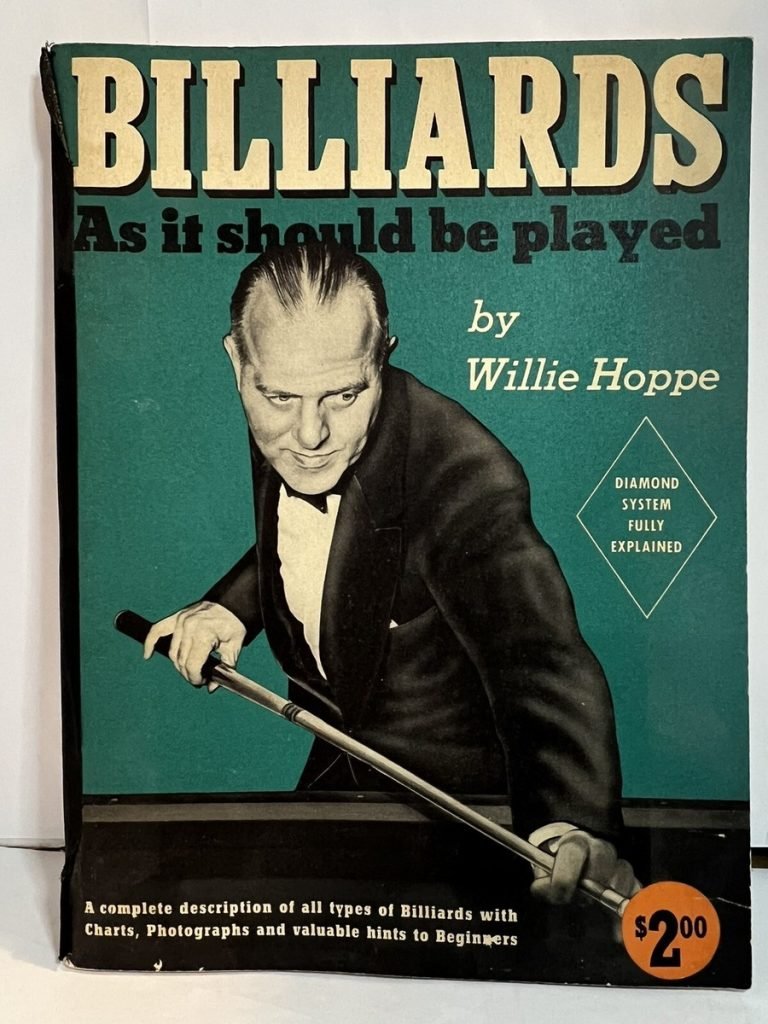
In 1941, Hoppe published it in “Billiards as It Should Be Played”.
However, a key testimony in “McGoorty: A Pool Room Hustler”, by Robert Byrne,

points to another truth: the architect of the system and, in particular, of the Base 50 System, was Johnny Layton.
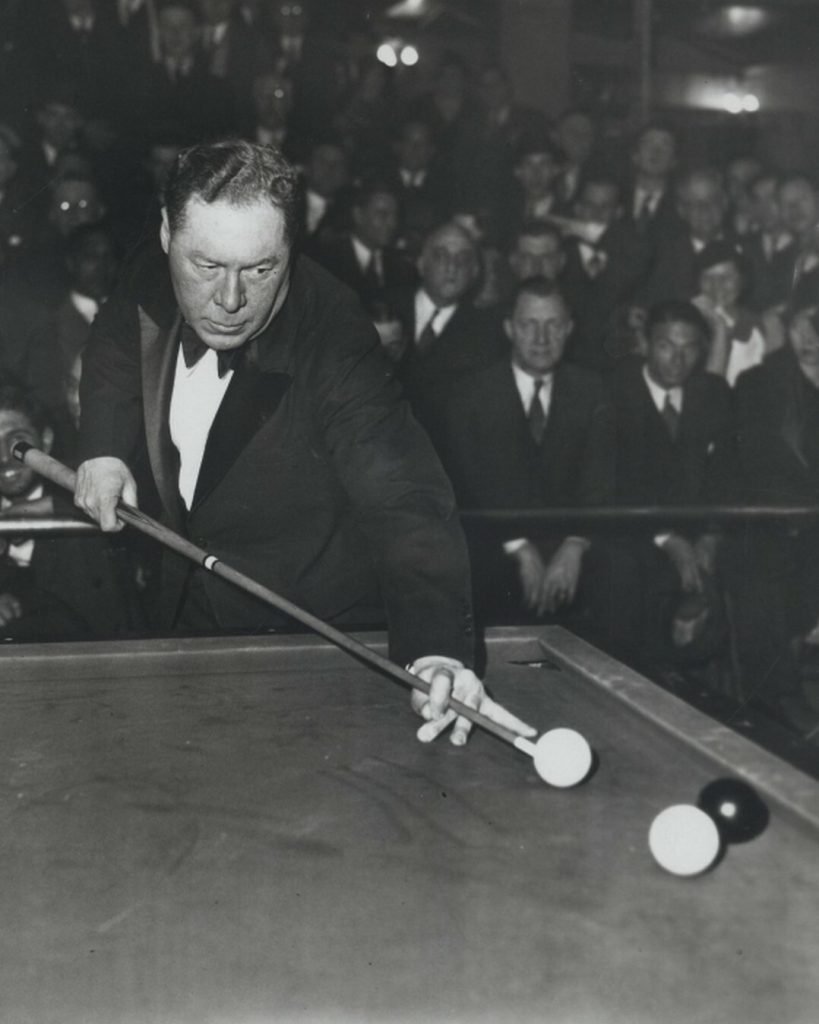
Layton, a multiple world champion, did not receive the nickname “The King of the Diamond” by chance.
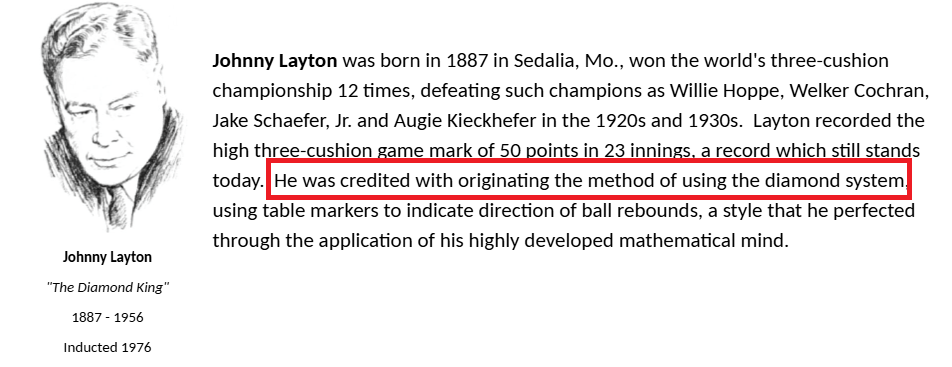
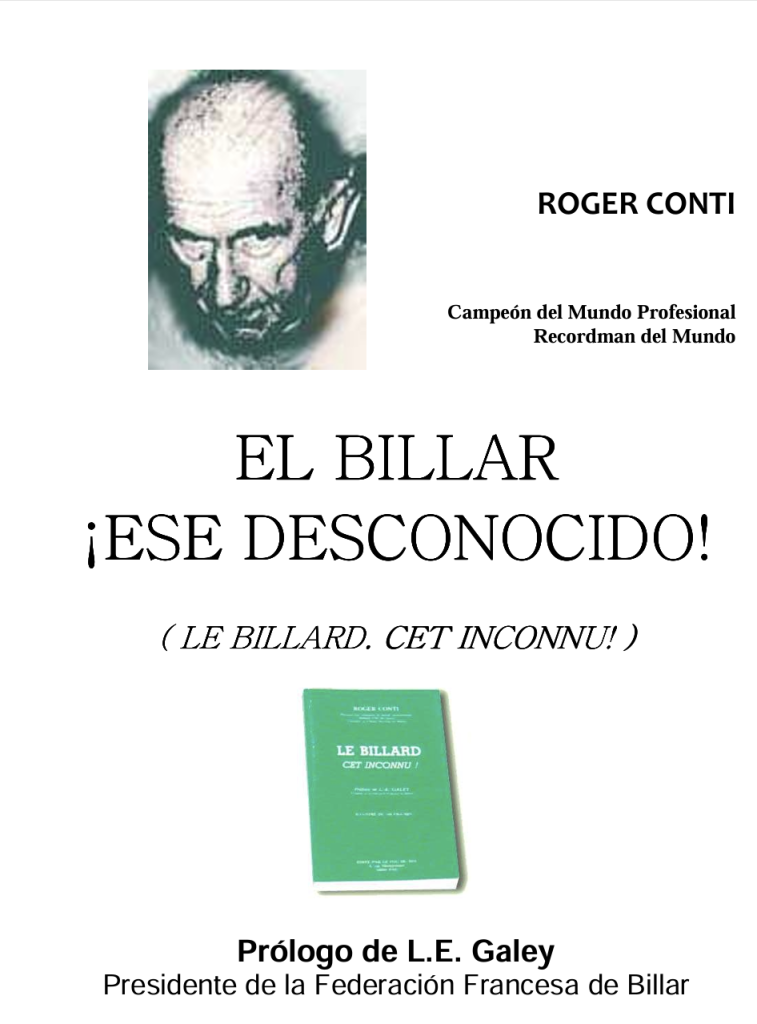
The American Billiard Congress Hall of Fame credits him as the inventor of the diamond system. Roger Conti, in his book “Le billard cet inconnu“, published in 1957, presents an expanded, more detailed, and complete version of the Base 50 system.
Is There a Mathematical Foundation for the Base 50 System?
None of the publications mentioned so far presents a specific mathematical foundation that supports the Base 50 System as such.
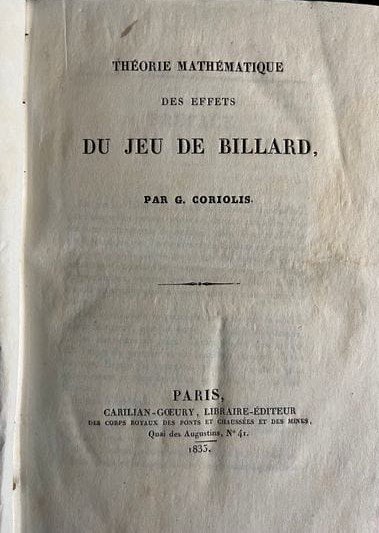
Even so, it is worth highlighting works that pave the way: “Théorie mathématique du jeu de billard” by Gaspard-Gustave de Coriolis.
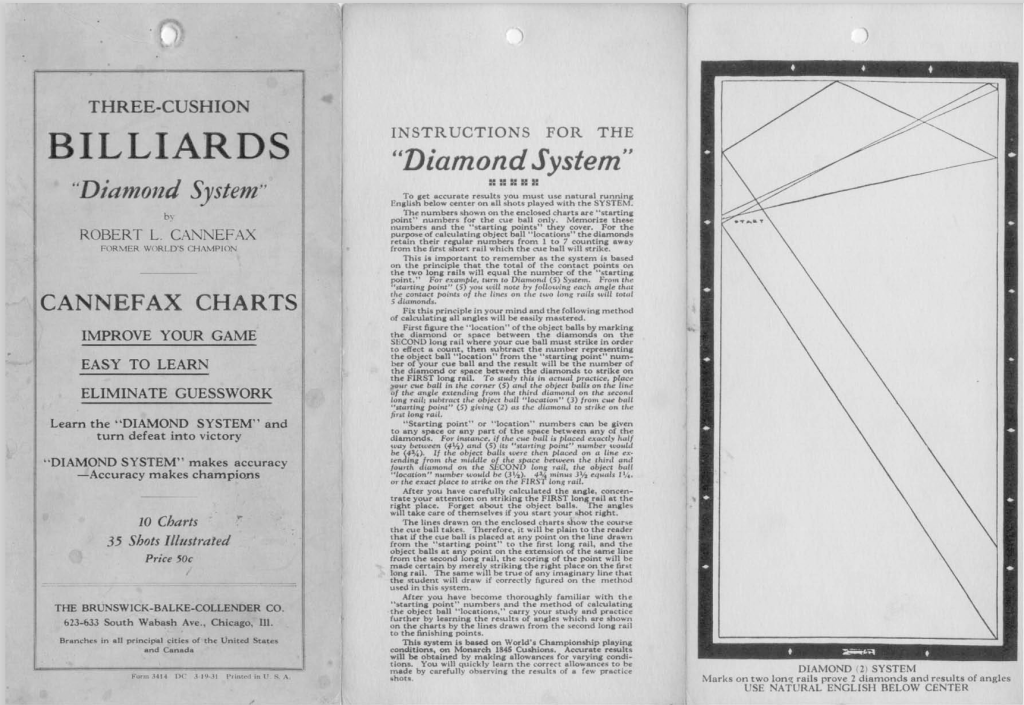
“Diamond System” by Robert L. Cannefax.
“Billar: Teoría de los Diamantes” by Antonino Cilione.
This is NOT downloadable due to Copyright.

These texts explore physics, geometry, and trajectories with rigor. They illuminate the map. But they do not directly tie the numbering 15, 20, 25, and so on, up to 50, to a closed mathematical derivation.
That missing piece is what I am going to give you today: a logical, simple, and verifiable explanation that reveals the origin of this numbering…
Join Maestro del Billar
Get access to premium Maestro del Billar content, exclusive to members:

✅Key #7: Ball Hit
✅Speed Plus System
✅Key #6: Exit Tangent
✅Key #5: Shot Line
✅Banana Shot: Complete System
✅Key #4: Parallels
✅Talk with a Sports Psychologist
✅Feather-Thin Hits
✅Key #3: Mirror
✅Key #2: Spin
✅Key #1: Halves
✅Ball Hit for Pass-Ball Shots
✅One-Cushion Method
✅Vertical Pass-Ball System
✅Cross-Table System
✅Master Halves System
✅Vertical Reverse Spin System
✅Rotation Systems and Techniques
✅X-Ray Plus System
✅Short-Angle LKL Guide
Halves and Spin: The Basis of Diamond Systems
Ready to see why the departure rail has that magical numbering? Don’t blink.
Now, let’s get to the heart of the system.
The Base 50 System, like many other systems, rests on two simple laws:
1. The law of halves.
2. The law of spin.
The Law of Halves
Let’s recall the Halfway Law: if you choose a starting position and a target, you can find the aiming point on the first rail to connect both when playing a rail-first shot without spin.


That aiming point is always the midpoint between the starting position and the target.
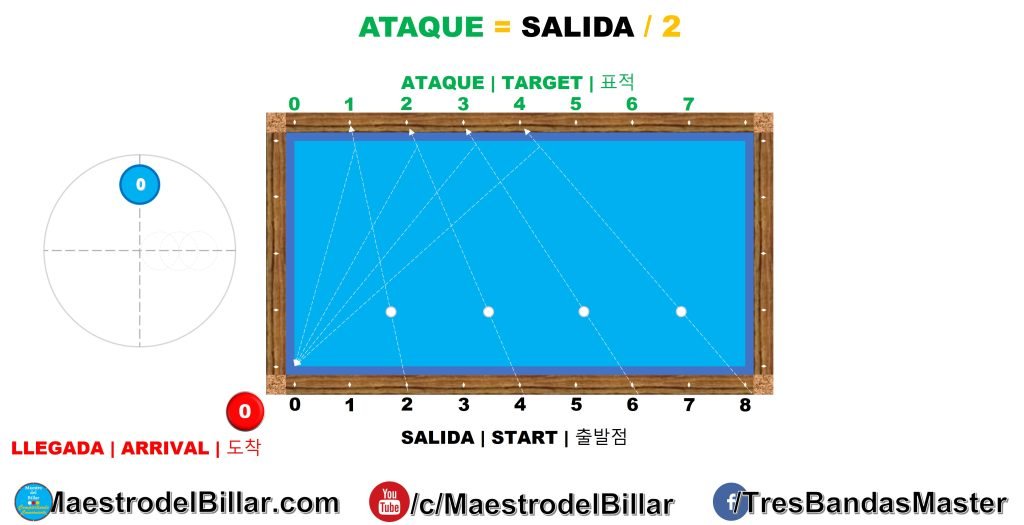
And so, we would obtain the first approximation to the numbering of the departure rail, of the base 50 system.
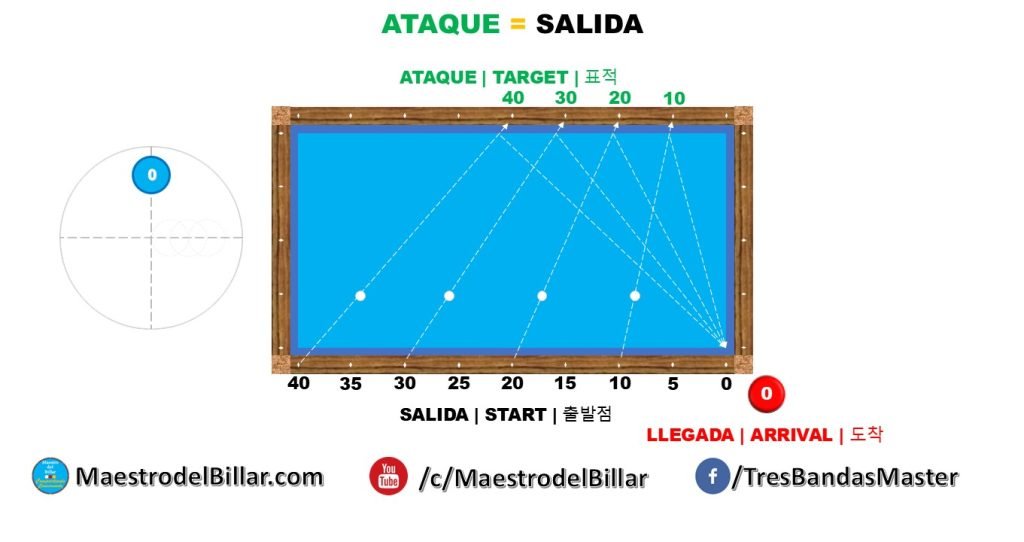
The Law of Spin
The two most used systems for marking spin are the standard and the clock system. Here we will use the standard.

On long rails, each spin point shifts the target by half a diamond:
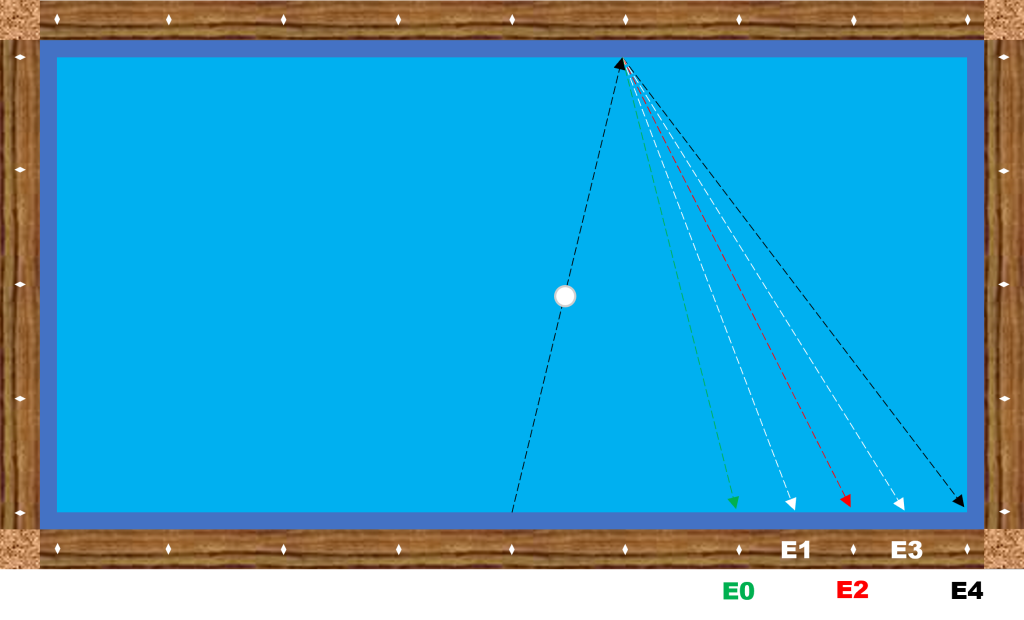
Spin 1: plus half a diamond on the target.
Spin 2: plus one diamond on the target.
Spin 3: plus one and a half diamonds on the target.
Spin 4: plus two diamonds on the target.
UniBillar: The Billiards University
Explore a wide range of digital billiards resources.
Study at UniBillar, the Billiards University, with leading instructors from Latin America.
José “Pepe” Hernandez, Pedro Gonzalez, Marco Vallejo, Fernando Diaz, Mauricio Gutierrez, Julián Torres, Jaime Carrasco, Carlos Vallejo, Fernando Castillo “El Flaco Billarista”, Rafael Galeano.

Pattern in the Halfway Law
Hidden at first sight is the following pattern: If you move the aiming point half a diamond, the target changes by one diamond.
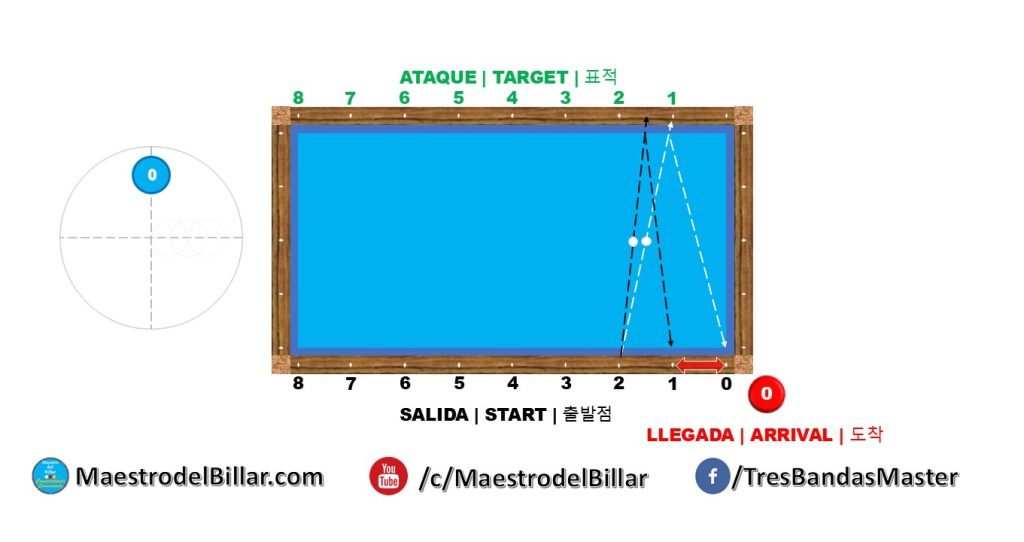
If you move the aiming point one diamond, the target changes 2 diamonds.
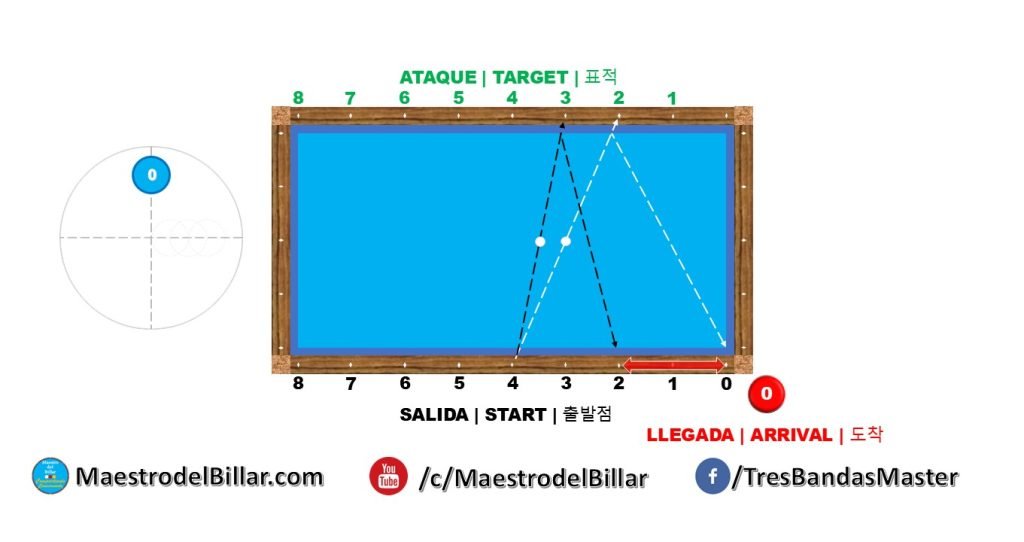
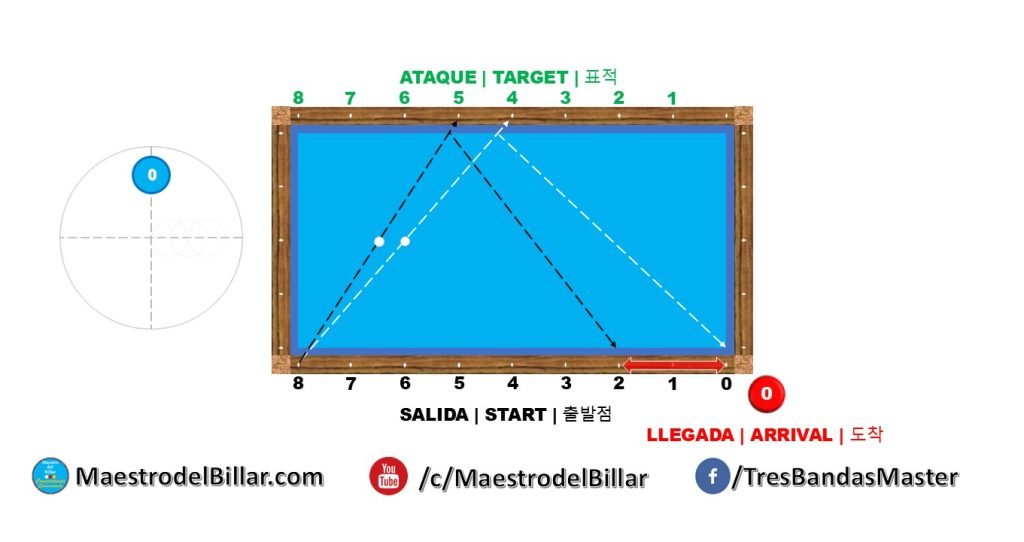
This holds for any starting position located on the long rail.
Halfway and Spin 4 Pattern
Another pattern, very simple: to connect a starting position with a target, delay the midpoint of the aim by one diamond and apply spin 4.
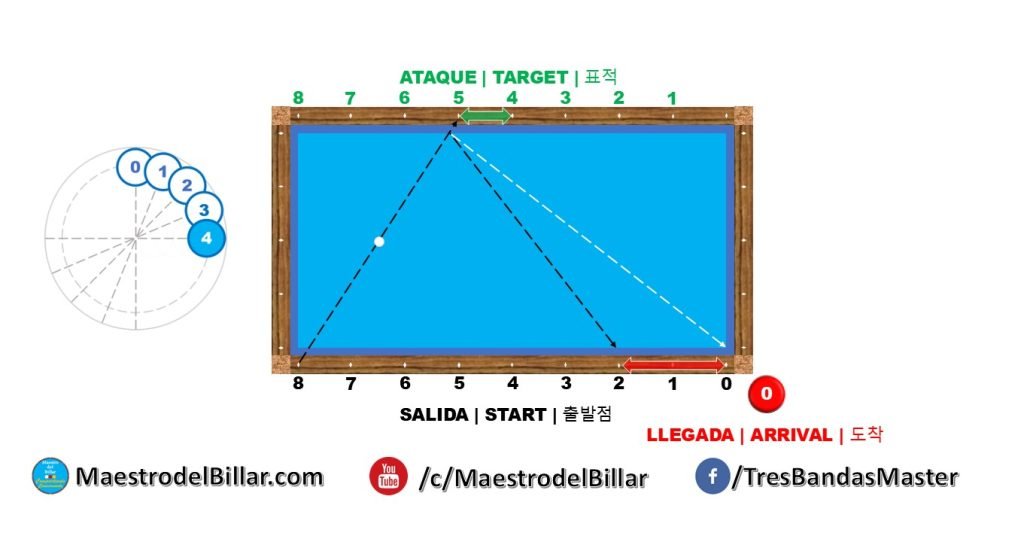
Thus, the spin exactly compensates for the variation in the target (moving the aim one diamond changes the target 2 diamonds, and spin 4 corrects those 2 diamonds).
If we now formulate a system that we could call “Halfway with Spin 4” we would have the following:
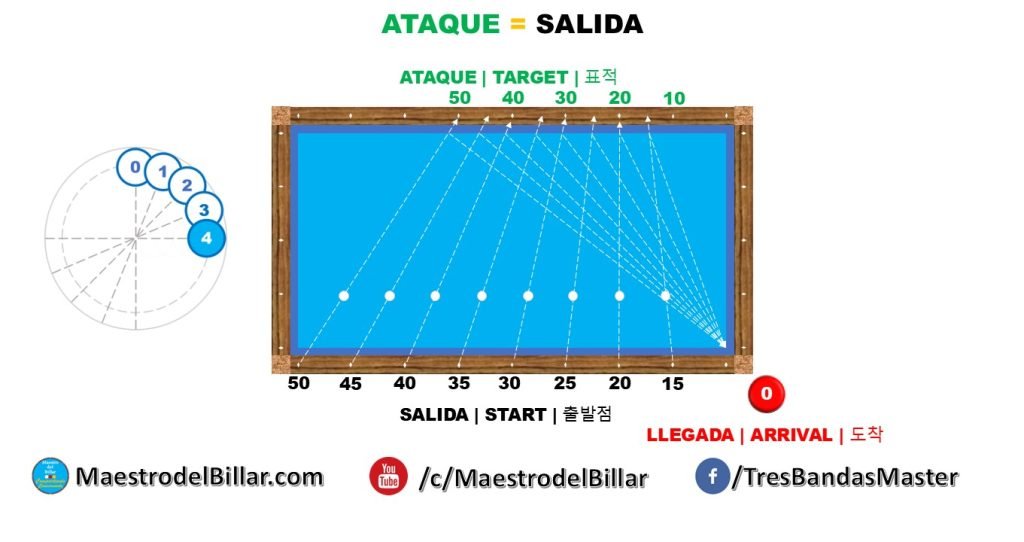
With a logical and simple process, we have explained why the corner of the billiard table at 3 rails is worth 50.
The Base 50 System was born as “Corner Five” and is also known as “Five & Half”: the corner is worth 5 and the numbering of the departure long rail decreases by half a point per diamond.
To avoid decimals, all values were multiplied by 10, and thus the corner came to be worth 50.
We still need to review departures from the short rail. By the way, in the video “The Other Half of the Halves System” we explain how to use halves when playing from the short rail.
We also need to cover arrivals on the third rail and complete the numbering of the departure, aim, and arrival rails.
The numbering of the departure rail holds another powerful secret: it explains why the arrival value on the third rail is obtained by subtracting the aim value from the departure value.
You can now read the second part: why the Base 50 formula works, with a worked example. Share this post with your billiards friends.
See you at the table!
FREE e-Book (PDF): Base 50 System Origin
Download and share the PDF e-Book on the Base 50 System Origin.