We present ▶ everything you need to know to control the cue ball (cue ball control) after hitting another ball. We will see how spin, speed, and ball hit influence the final trajectory of our ball in billiards.
Ball hit and ball control
Developing the skill to take the desired ball hit (ball hit), control the object ball (placing it in the most fertile zone for the next shot) and the cue ball (entering the calculated trajectory), along with extensive knowledge of trajectory calculation (diamond systems), is the perfect recipe to become a great player of billiards.
Trajectory calculation requires a certain mathematical skill (adding, subtracting, multiplying, and dividing), understanding the essence of billiard systems, and some good memory, but when it comes to ball hit and ball control, it is when the talent and skill of the best mark the BIG difference.
Tips on aiming and taking the ball
When we observe a spherical objectfrom a distance, we can always determine with greater precision the edges than any interior point of that object.
When aiming, always try, whenever possible, to use as a shooting reference, one of the edges of the object ball (ball 2)
Given the straight shape of the cue, whenever possible, we should always use the cue tip (suela, ferrule, or tip) as the sight point toward the a shooting reference.
Let’s look at the most important ball hits and some of their shooting references

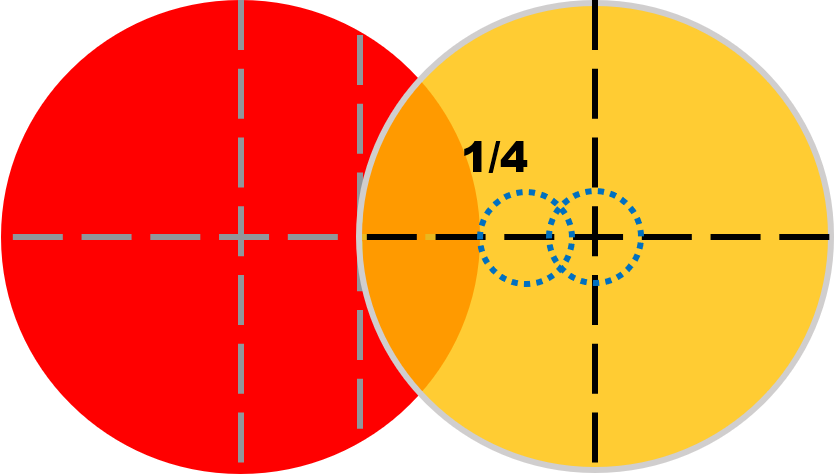
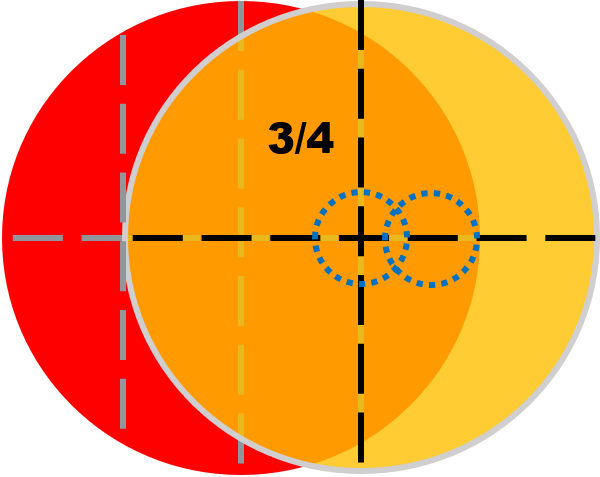
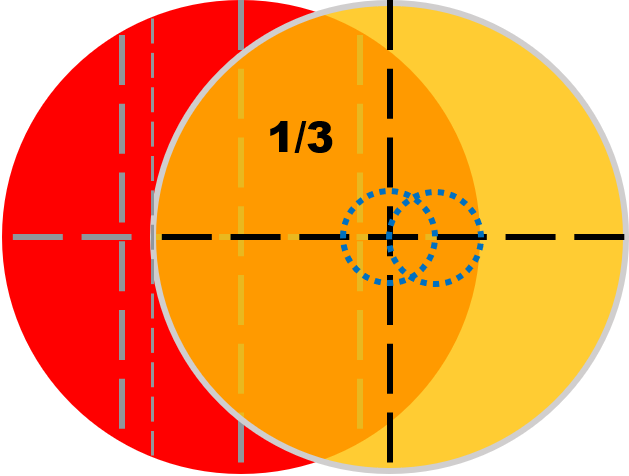

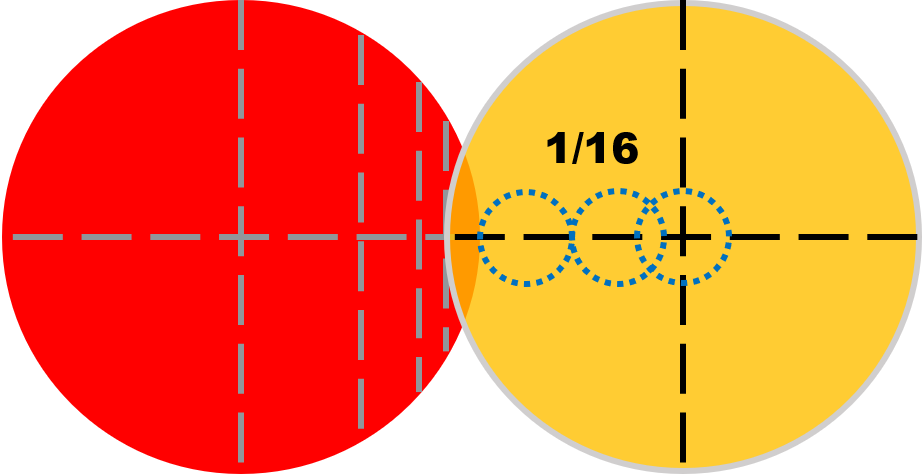
In the “Fundamentals and Technique” section, you will find the video “The ball hit and its angles“, with a description of what was mentioned previously.
The 90-degree rule


The 90-degree rule is used when we want to open the angle and for this we hit our ball slightly below the center, achieving neutralizing in this way the natural forward rotation (follow or top spin) and avoiding at the same time making a draw (back spin)
In the explanatory video there is a very good slow-motion segment that allows you to clearly appreciate this physical phenomenon.
Ball Hit Master System
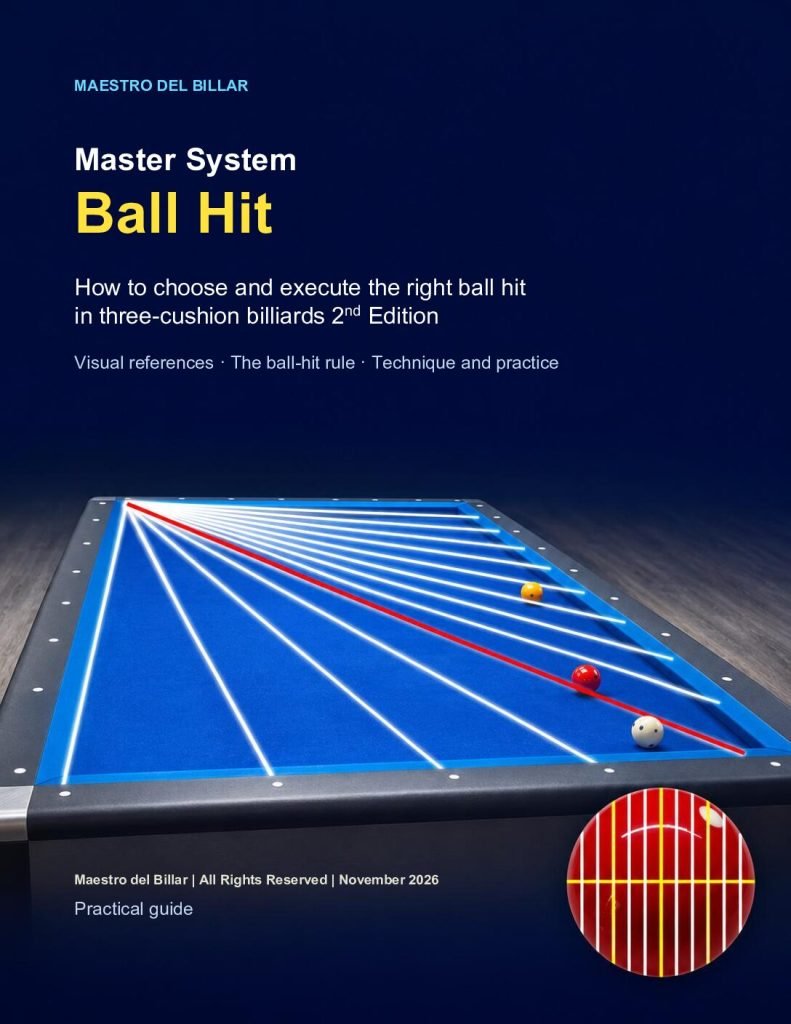
Even when you can read the path of a carom, one decision shapes the shot: how much of the object ball to hit to send the cue ball along that path. This guide shows how to read the key reference points, judge the thickness of the hit, aim with your cue, play feather-thin contacts, and use the reflections and shadows on the balls and cloth.

The stroke used is dry or held, with very little or no penetration or advance and as if trying to retract the cue.
Let’s see how master Eddy Merckx uses the dry or held stroke.
The 30-degree rule


The 30-degree rule is the most commonly used, as it follows the natural forward rotation of our ball. To achieve this, we strike our ball normally at the center or above it, ensuring that our ball arrives just before impact with natural forward rotation (follow or top spin).
In the explanatory video there is a very good slow-motion segment that allows you to clearly appreciate this physical phenomenon.

The stroke used is penetrating and forward, as if trying to pass through the ball with the cue.
The 30-degree rule is extremely important, as there is a physical and mathematical analysis concluding that ball hits between 1/4 and 3/4 of the ball comply with this rule. This leaves a margin of error quite wide when we try to take about half a ball!!!
The exact opposite happens when we try to take less than 1/4 of the ball or more than 3/4 of the ball, where even the slightest error in the hit thickness causes the angle to change significantly!!!
How to measure angles (degrees) in billiards
Given the great difficulty of calculating angles by eye, several techniques have been invented to perform this type of measurement in a natural and approximate way. Below we present the most commonly used ones:


Taken from Billiards Digest 07/2008

The explanatory video shows how to use the peace sign technique.
In Technical Proof A.4, there is a very interesting study on the calculation of the final trajectory of the cue ball, for any ball hit, speed, and spin!!!
👨🏫 Requires advanced mathematics!
Join Maestro del Billar
Get access to premium Maestro del Billar content, exclusive to members:
✅Key #7: Ball Hit
✅Speed Plus System
✅Key #6: Exit Tangent
✅Key #5: Shot Line
✅Banana Shot: Complete System
✅Key #4: Parallels
✅Talk with a Sports Psychologist
✅Feather-Thin Hits
✅Key #3: Mirror
✅Key #2: Spin
✅Key #1: Halves
✅Ball Hit for Pass-Ball Shots
✅One-Cushion Method
✅Vertical Pass-Ball System
✅Cross-Table System
✅Master Halves System
✅Vertical Reverse Spin System
✅Rotation Systems and Techniques
✅X-Ray Plus System
✅Short-Angle LKL Guide
Don’t fail to consult your digital billiards library!
The law of deflection (cue ball deflection)
The law of deflection explains the deviation from its natural trajectory that our ball (cue ball deflection) suffers when side spin is applied or when it is struck with an inclined cue
The following video describes this physical phenomenon in detail
Explanatory video
In the following video, you will find a detailed explanation of how to calculate the final direction of the cue ball (cue ball control) according to the ball hit of the ball, spin and speed used.
The following graph shows a summary of what was presented in the previous video:

image taken from billiards.colostate.edu
No vertical spin (stun or stop ball shot) ▶ Rule of the 90 degrees
Follow (top spin or follow shot) ▶ 30-degree rule
The effect of speed on the 30 and 90-degree rule
Using the peace sign ▶ 30-degree rule
Draw (draw or back spin) ▶ 3A rule
Conclusions
Ball hit and control is a complex topic; you must proceed with patience and lots of practice to develop this important skill. Surely, over time, you will be able to train your mind to find the 30 and 90-degree trajectories with a certain degree of accuracy. Perhaps, with time, you will become an expert in using the peace sign ✌
In three-cushion billiards, there is a lot of literature about diamond systems, but very little on the study of ball hit and control. Fortunately, in pool billiards, there are wizards in this field!
In this post, we have attempted to consolidate the key information that forms the foundation and supports the studies and analyses in this complex area of our passionate game of billiards.
In ? “your digital billiards library“, you will find the following links:
UniBillar: The Billiards University
Explore a wide range of digital billiards resources.
Study at UniBillar, the Billiards University, with leading instructors from Latin America.
José “Pepe” Hernandez, Pedro Gonzalez, Marco Vallejo, Fernando Diaz, Mauricio Gutierrez, Julián Torres, Jaime Carrasco, Carlos Vallejo, Fernando Castillo “El Flaco Billarista”, Rafael Galeano.

Collection Billiards Digest since 1992
Collection Technical Proof
With information ? very valuable in the study of ball hit and control
Support us
Support Maestro del Billar by searching for or buying whatever you want on AMAZON through our online store.
Share, comment, or ask…