
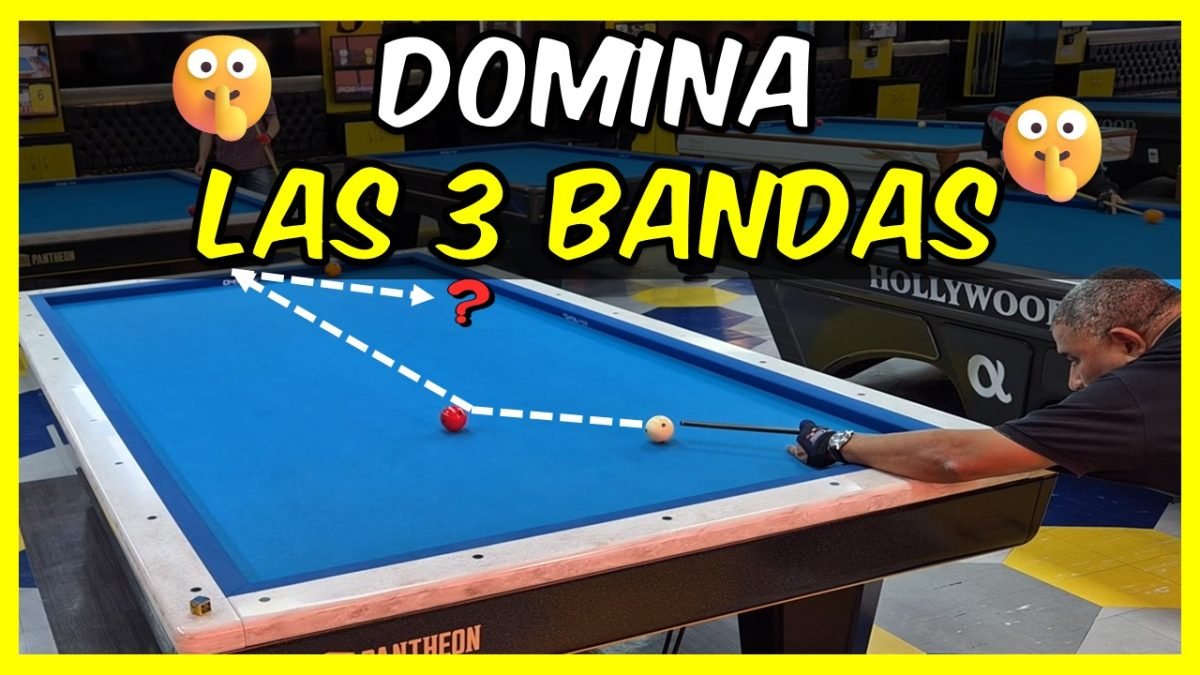
Today I want to share with you a technique that can improve your three-cushion billiards game: the frontal attack with maximum spin on the short rail . This technique will allow you to make three-cushion billiard caroms with greater precision and strategic clarity that will change your perspective on the game.
Have you ever watched the great masters perform seemingly impossible carom shots and wondered how they do it? Well, one of their secrets is this technique that you too can now master.
This technique will not only allow you to expand your repertoire of shots, but also to visualize the trajectories of the balls in a completely new way. Imagine executing three-cushion shots with renewed confidence, whether playing from the object-ball or a rail first shot.
Throughout this post, I’ll show you step-by-step how to master this technical yet fascinating move. We’ll analyze how to apply the correct spin, calculate the angles , and read the table like the pros.
So, if you want to take your game to the next level, stick with me! Get ready to learn, practice, and become a true short-rail master with maximum spin. Let’s get started!
Master Maximum Spin: The Key to Control and Precision in 3-Cushion Billiards
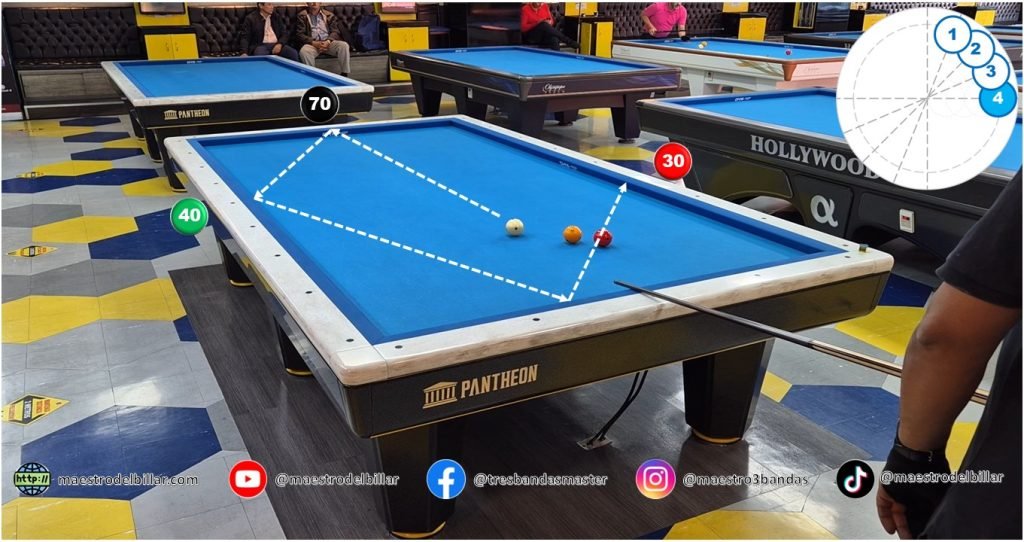
Maximum spin is key to controlling the cue ball and anticipating its movements on the table. In standard notation, it’s known as effect 4 and is marked at the ends of the equator of the cue ball.
Here it’s important to remember a golden rule: apply effect without overdoing it. If you add too much effect, you could create unexpected deviations, such as an unwanted curve or, even worse, a miscue shot.
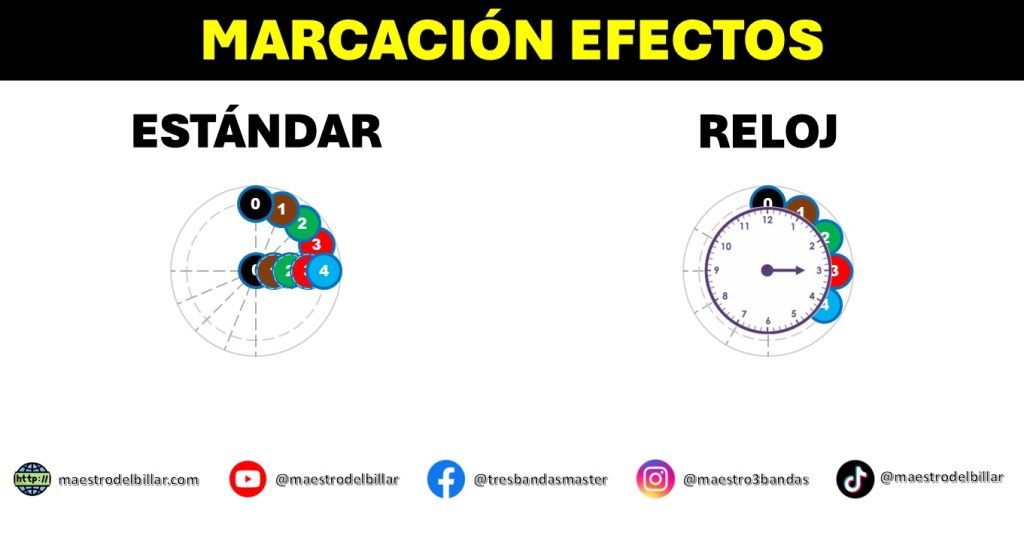
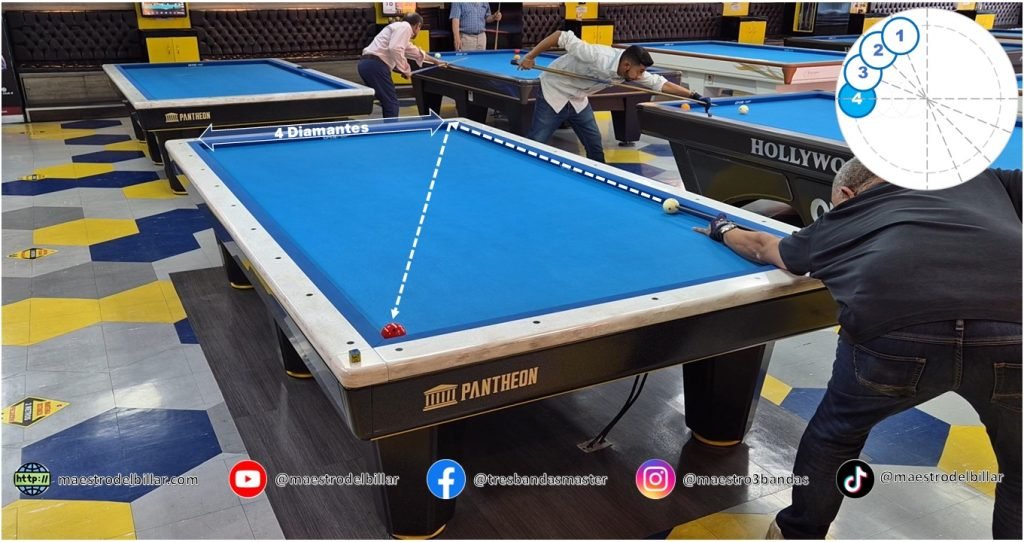
Now, let’s talk about precision. When you execute maximum spin correctly, the cue ball acquires a rotation that creates a four-diamond opening. This phenomenon is crucial for planning complex caroms and anticipating the exact bounces on each shot.
Use Triangulation: The Key to Predicting Cue Ball Paths in Three-Cushion Billiards
Now we will solve the problem of visualizing the point of contact on the second rail, a key piece of information for accurately predicting the cue ball path.
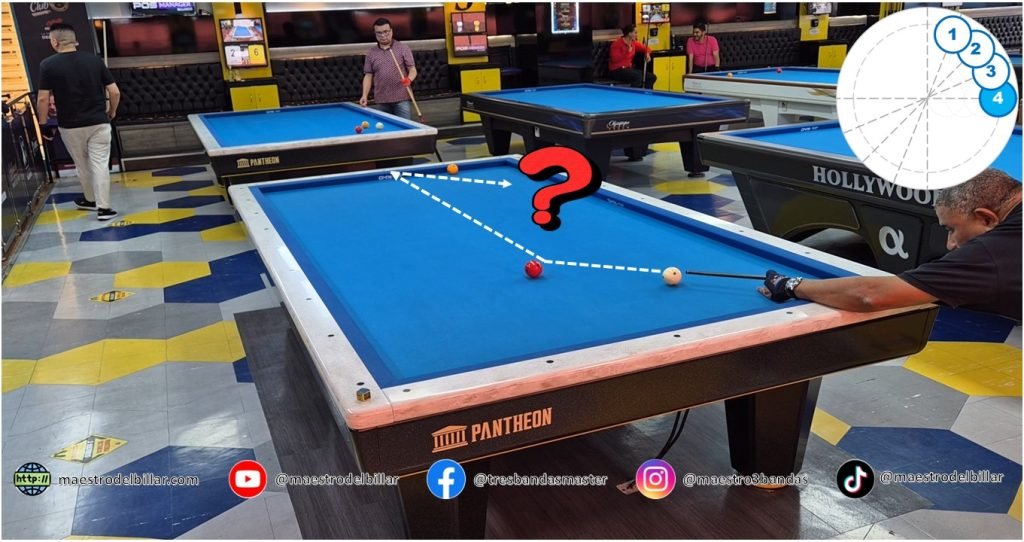
We know that the effect 4 produces an opening of 4 diamonds. However, there is a more interesting and visually intuitive way to represent this bounce angle: using the triangulation technique.
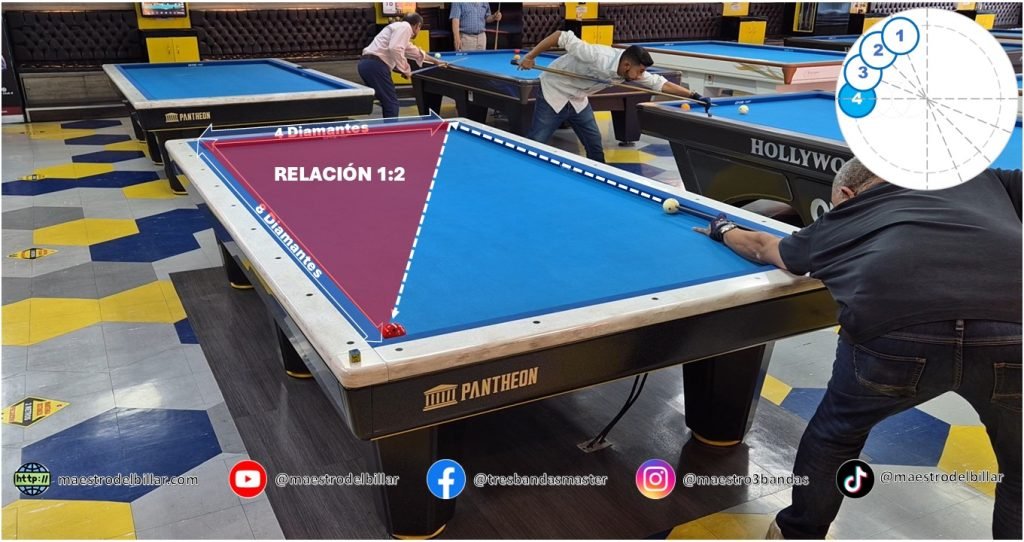
A four-diamond opening forms a special triangle: four diamonds on the short rail and eight diamonds on the long rail. This ratio, 4 to 8, or, to simplify, 1 to 2, is constant. That is, no matter where the point of contact is on the first rail, this geometric relationship is always maintained. This gives us a visual and practical tool for predicting the bounce and playing our shots with surgical precision.
For greater clarity, let’s analyze some examples. Imagine we play a shot with maximum spin towards the short rail. We’ll identify how the triangle is formed and how that 1:2 ratio allows us to accurately determine the point of contact on the second rail.
Get ready, because these examples will help you understand how to apply the triangulation technique to master your shots in three-cushion billiards.
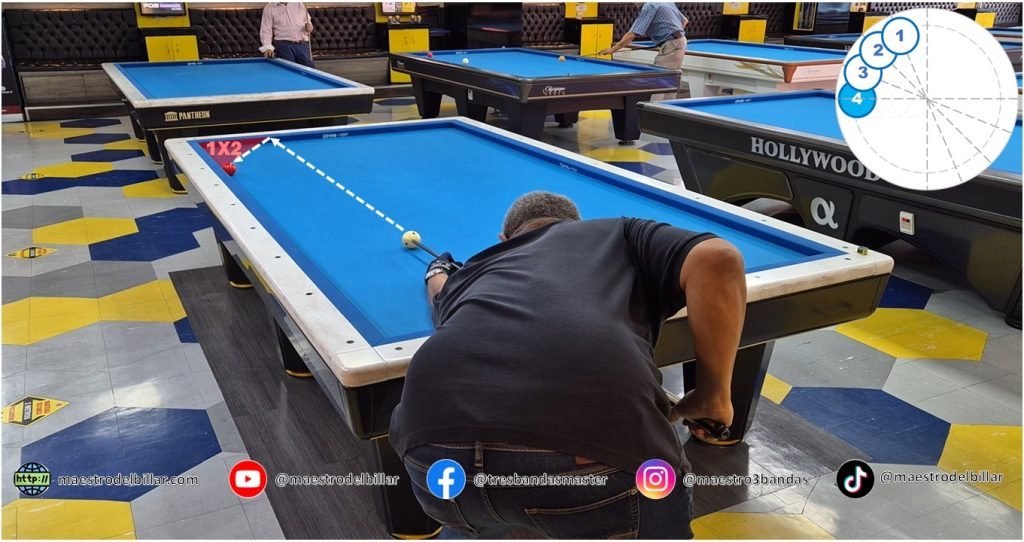
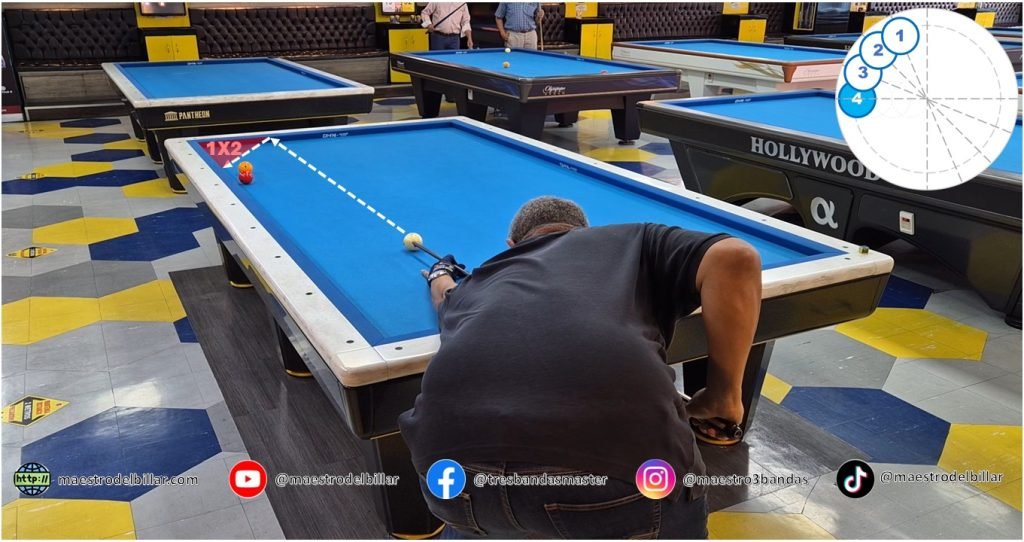
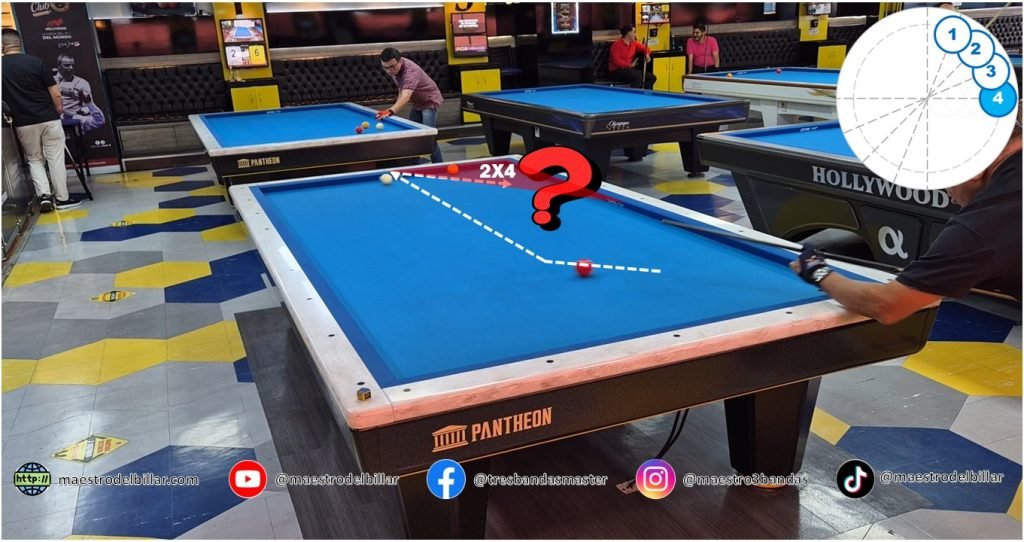
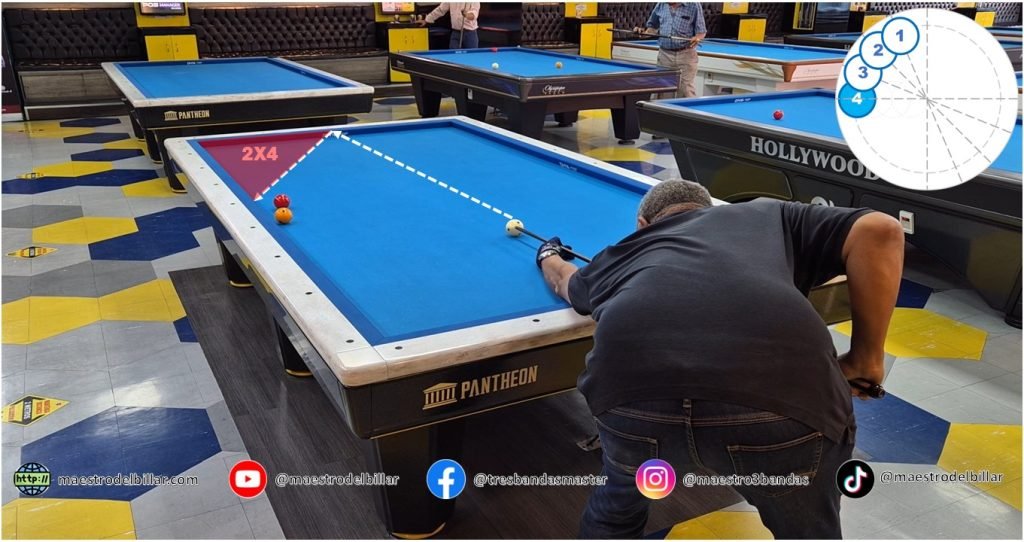
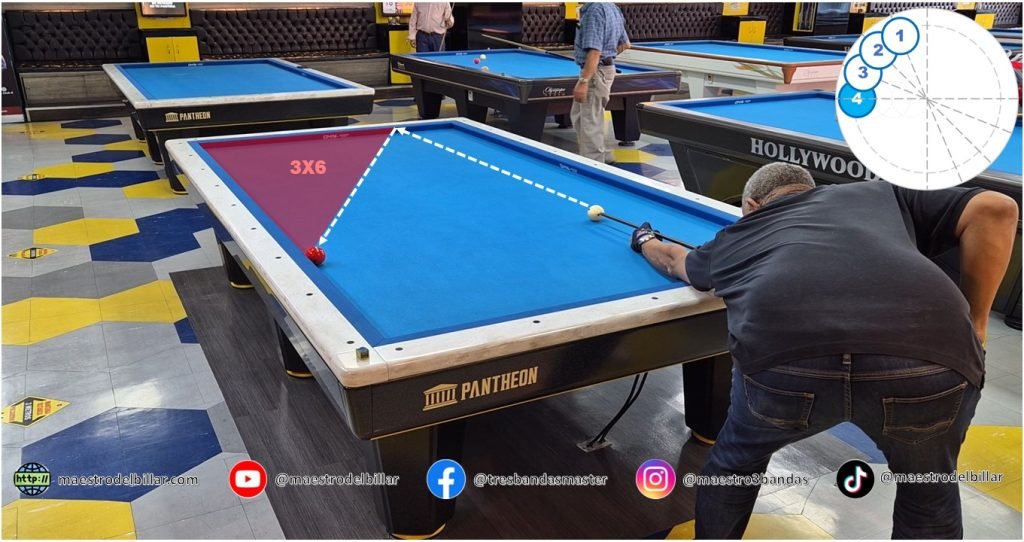
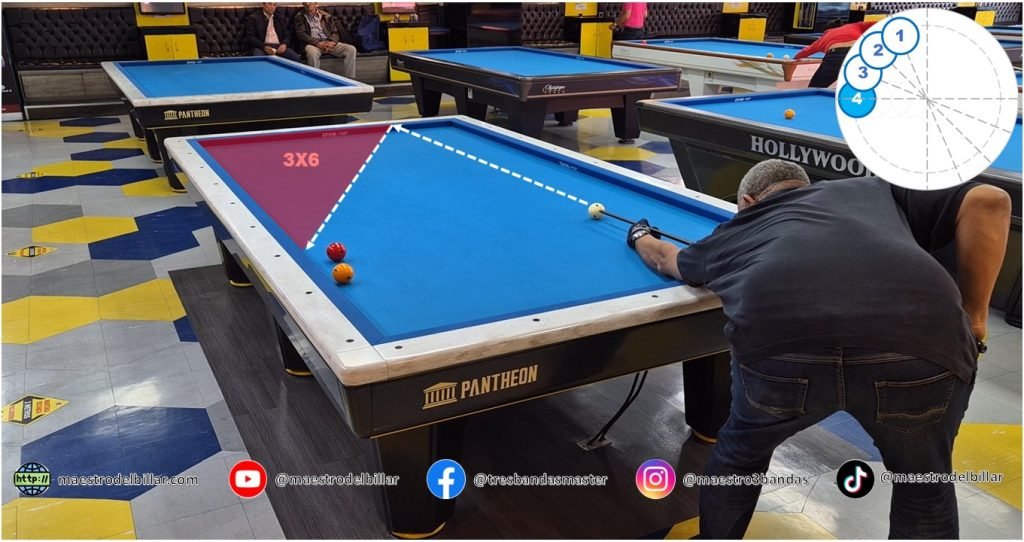
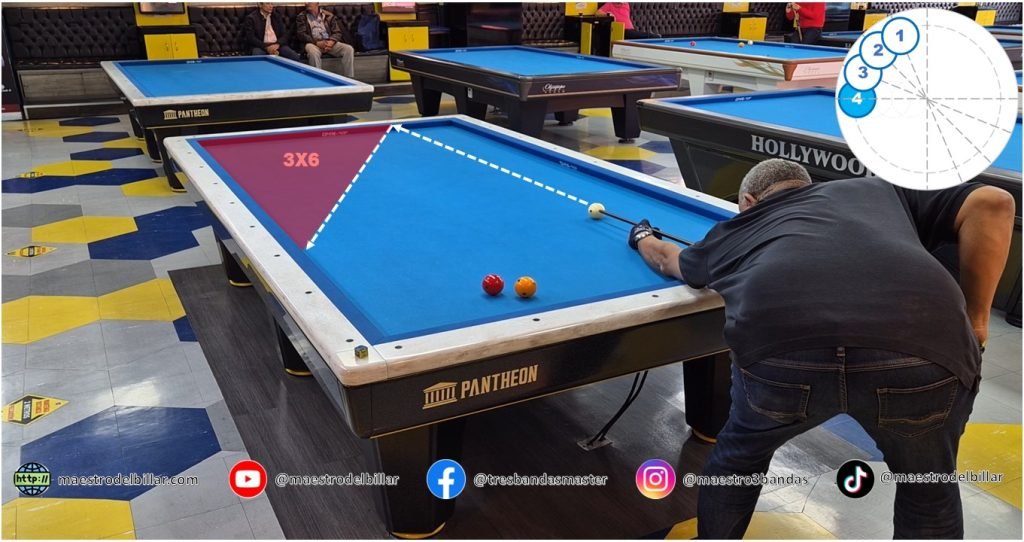
Let’s see how this tool can change the way you play! If you already have experience using the diamond system, tell us how it’s worked for you! Share your questions or comments, and let’s keep learning together.
Visualize and Master Complex Trajectories in Three-Cushion Billiards
In this final chapter, we’re going to raise the bar a bit and explore how to visualize more complex trajectories. To do this, we’ll turn to an old acquaintance: the classical or base-50 system .
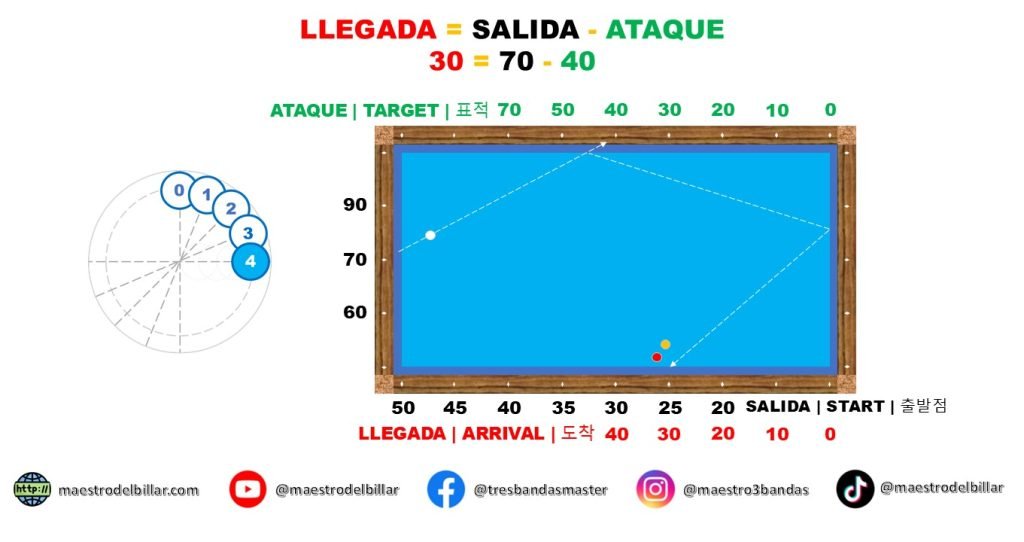
How to incorporate the base 50 system into the technique of short rail frontal attack with maximum effect?
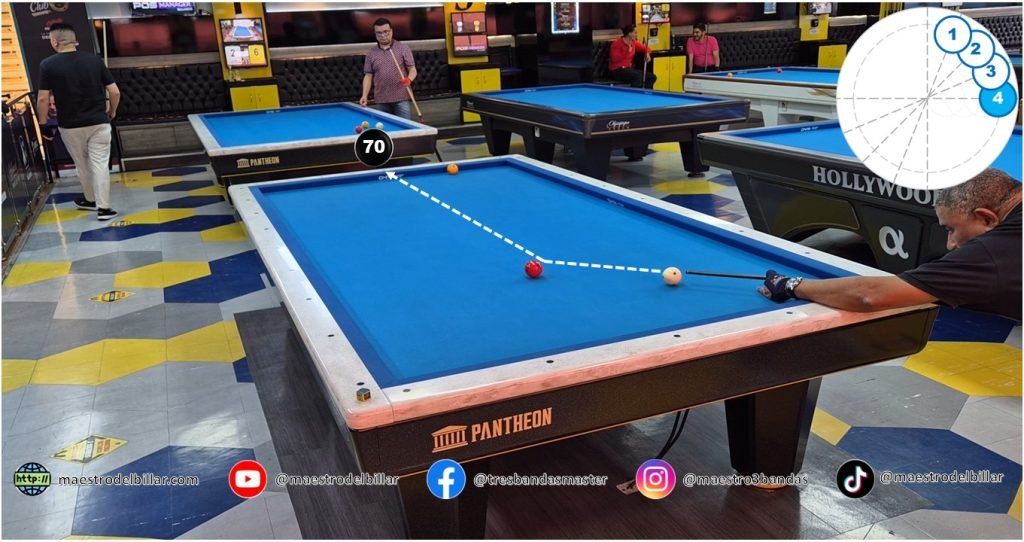
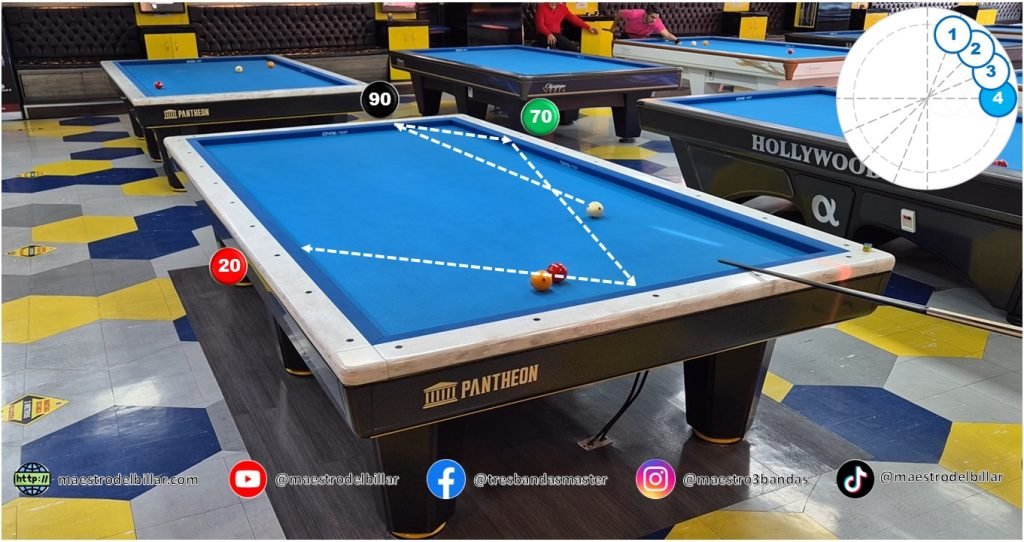
First: The point of attack on the first rail will give us a key reference: the start value. In the diagrams, we represent this value with a black circle.
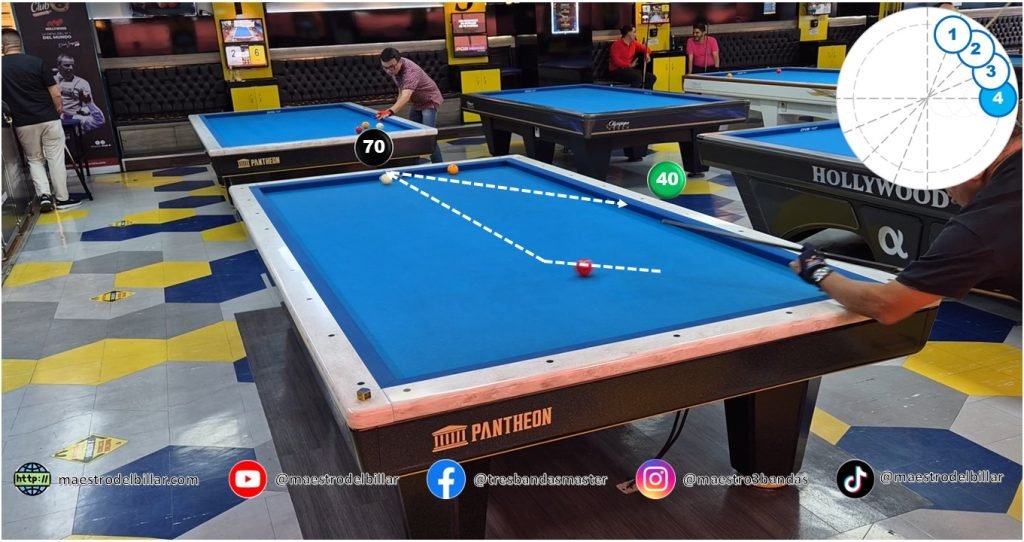
Second: The arrival point on the second rail will help us determine the attack value. We identify this with a green circle.
Third: With the starting and attack values, we perform the subtraction indicated by the classic or base 50 system. The result will give us the arrival value, which we graph with a red circle.
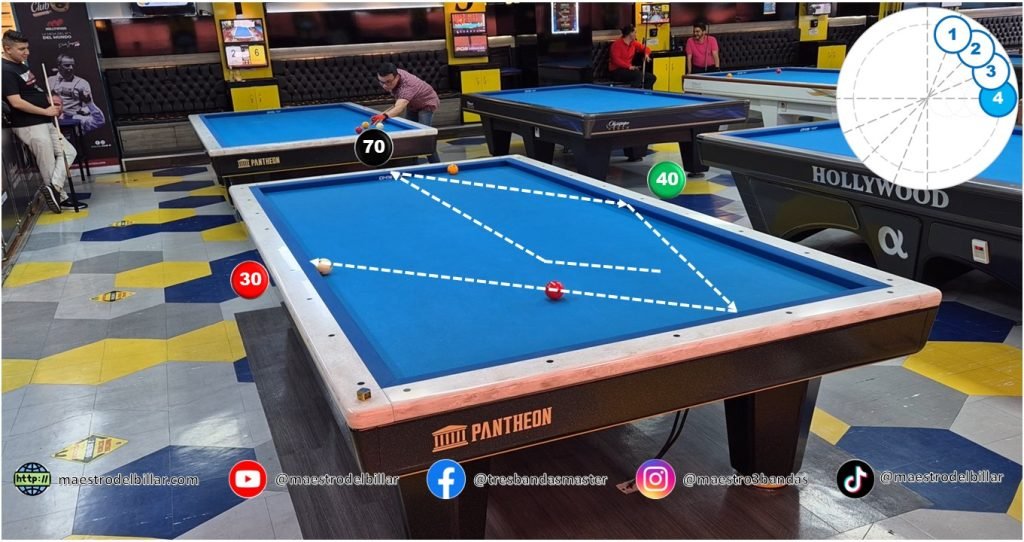
Fourth: Finally, the complete trajectory is visualized using the theory of the classical or base 50 system, interpreting the connections between the rails to achieve the desired carom.
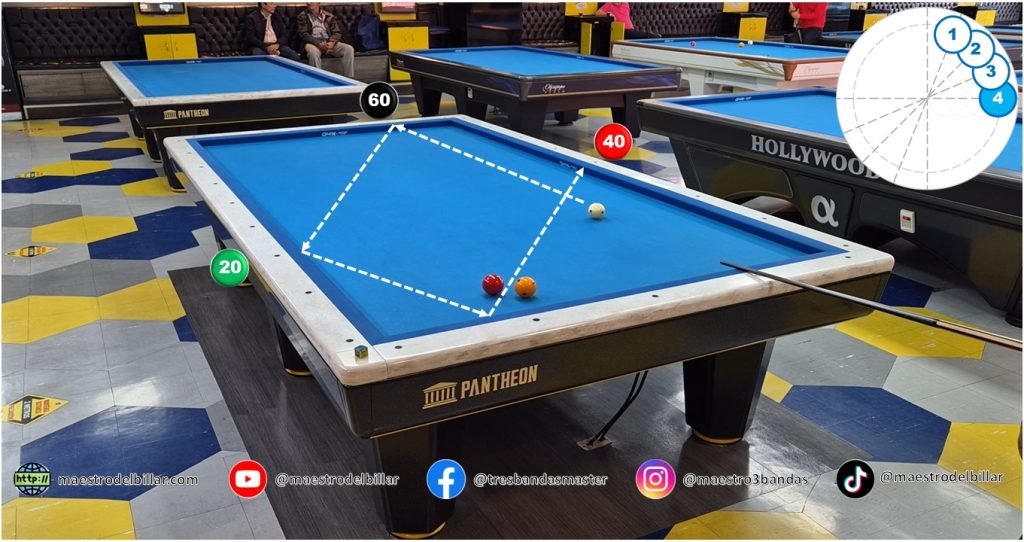
At first, this may seem complicated, but with practice it becomes routine and is naturally incorporated into our playing arsenal.
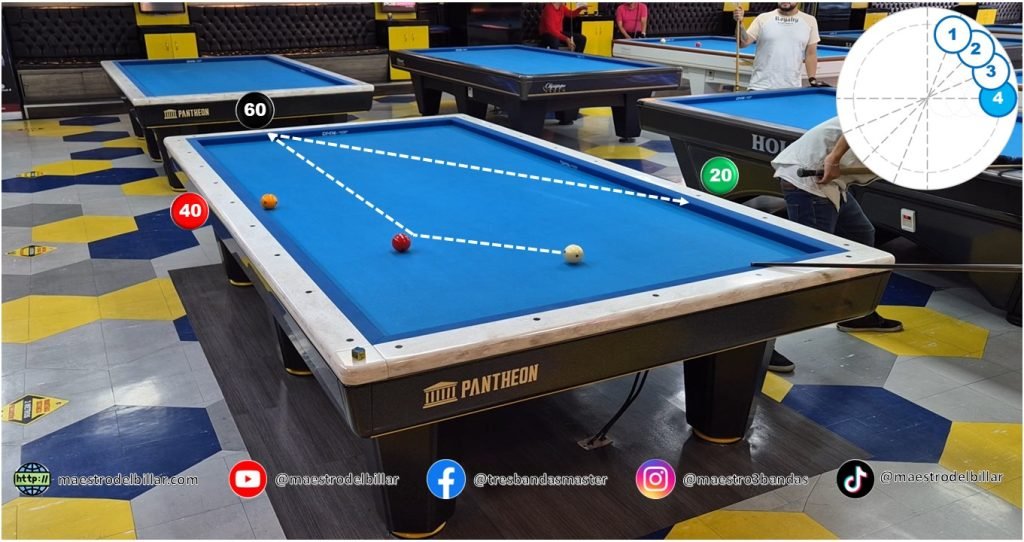
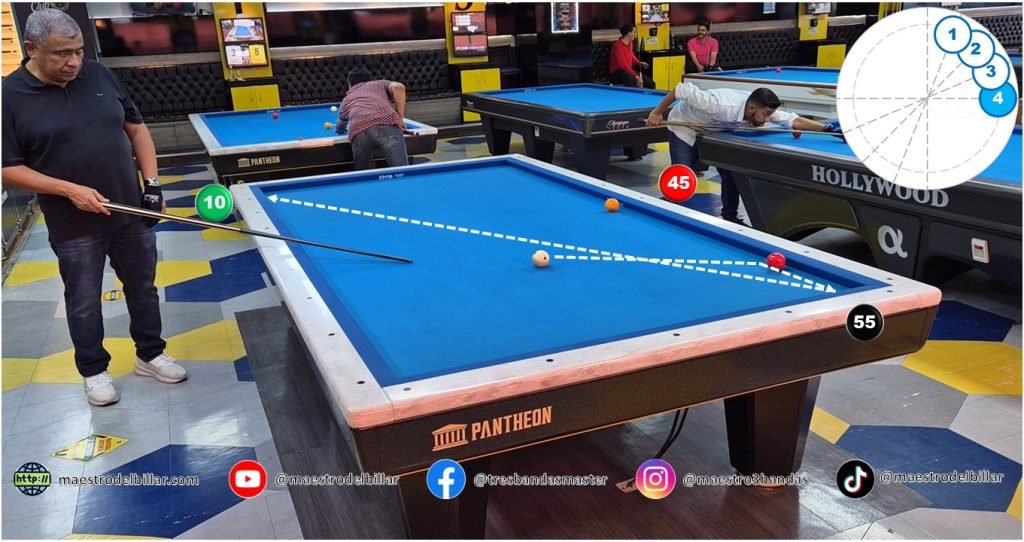
Remember: The key to mastering this technique is to practice each step calmly and patiently. Over time, you’ll understand how the cushions and values connect like a language unique to three-cushion billiards.
Before we say goodbye, I invite you to visit our website maestrodelbillar.com to learn more techniques and systems that will take your game to the next level.