
The Secret Method for Calculating the Ball Hit That Almost Nobody Knows
Most three-cushion billiards players calculate the ball hit instinctively. Without a method. Without reference. Through experience, mistakes, and many hours of practice.
But there is a method. Concrete, repeatable, and so effective that when you apply it for the first time you wonder how you ever played without it.
Why don’t you know about it? Because it’s not in the videos everyone watches. It’s rarely mentioned in books. And the few who do know about it seldom explain it.
Today that is beginning to change…
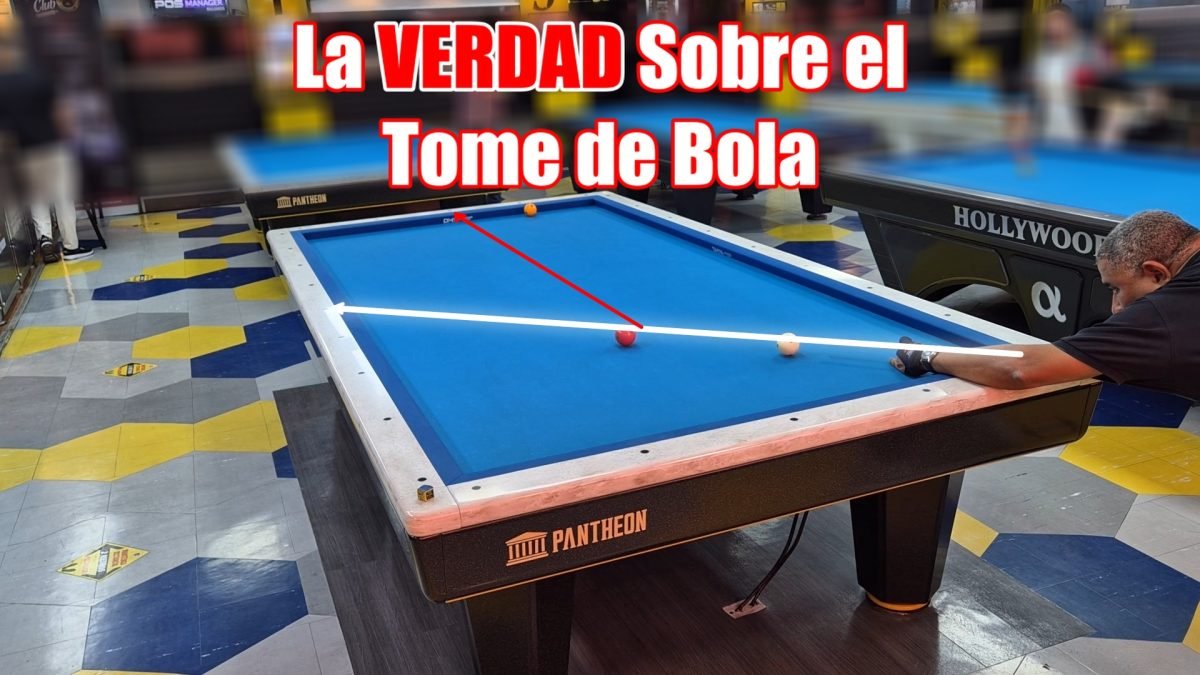
In this post, I’m going to show you the shot line, one of the two key factors that determine the ball hit. It’s a concept that’s always existed, but most people overlook it.
Let’s watch the promotional video Key #5: Shot Line and Ball Hit
The complete formula for all angles (openings) is only available to Members. Join Billiards Master and access exclusive Member-only PREMIUM content .
I am the “Billiards Master ”, and I am passionate about playing, researching and sharing knowledge about three-cushion billiards.
The Half-Ball Hit
If you could ever sit down with a world champion of three-cushion billiards and ask him for just one piece of advice about ball hitting, do you know what he would tell you?
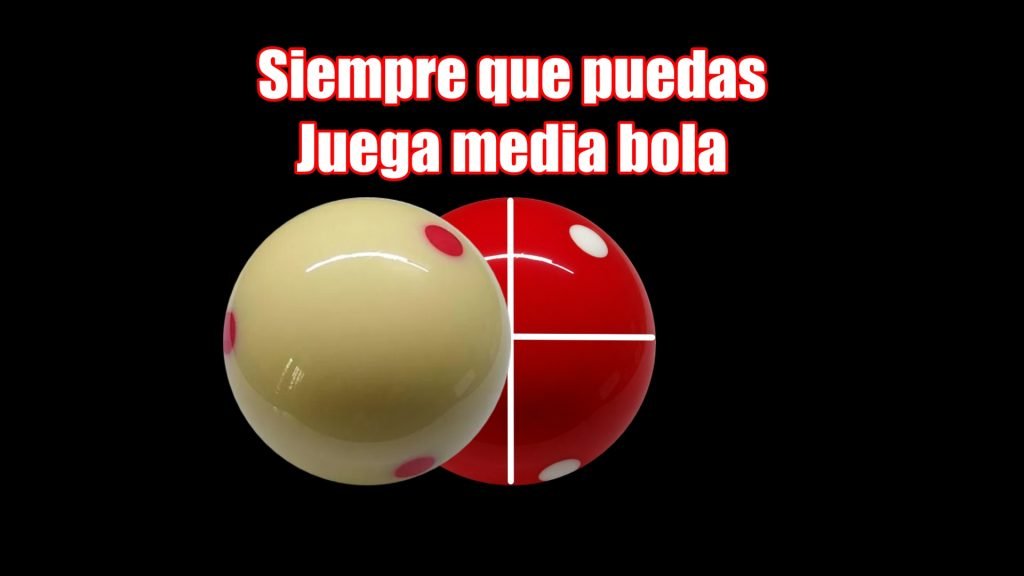
Half ball. Whenever possible, play half ball.
It sounds simple. And that’s precisely why most people ignore it.
But there’s a powerful reason behind that advice, and understanding it will change how you choose your caroms from today onwards.
When you hit a half ball, meaning your ball strikes exactly half of the object ball, something extraordinary happens: the trajectory becomes forgiving. If instead of hitting four-eighths you hit three or five, your ball’s path is practically the same. The small error doesn’t penalize you.
In contrast, when you play a fine or hairy ball, any small error in contact can change the trajectory much more.
Champions aren’t perfect. They’re smart. They choose the most reliable shots, the ones that forgive mistakes, not the ones that demand perfection.
How do I know when I should hit half-ball a shot?
But then the big question arises.
How do I know when to hit half-ball a shot?
To calculate the ball hit I need to combine two key concepts: the shot line and the exit tangent.
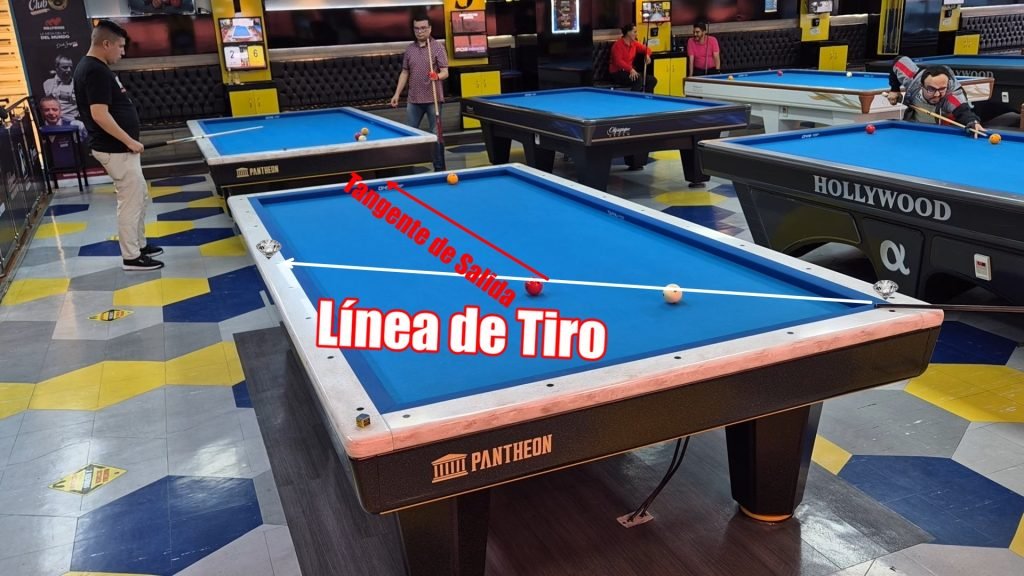
The shot line is the direction my ball follows before it touches the object ball.
And the exit tangent is the direction my ball takes after contact.
And the most powerful thing is that those directions can be measured using the diamonds on the table.
When I measure the shot line and relate it to the exit tangent, I begin to associate those angles with a ball hit.
In particular, the half-ball hit is associated with an approximate angle of 45 degrees.
Half Ball Hit and the 45 Degree Angle.
Now comes the moment when everything starts to take shape. Literally.
There is a geometric figure that tells you, without a doubt, that you are looking at a half-ball hit: A triangle.
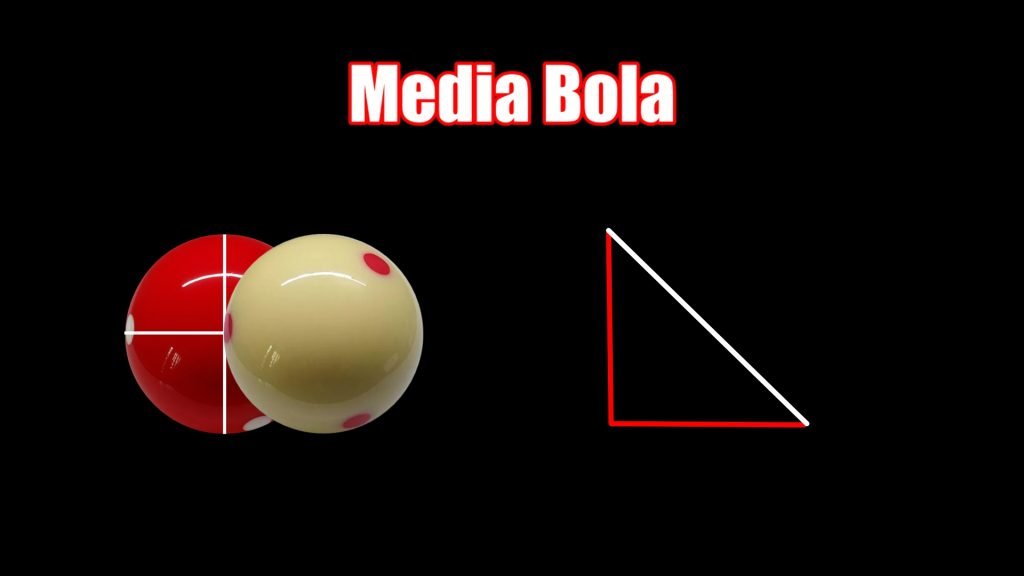
When you can draw a triangle on the table with two equal straight sides, the angle formed is 45 degrees. And a 45-degree angle between the shot line and the exit tangent means only one thing: half-ball hit.
It’s that simple.
That’s how powerful.
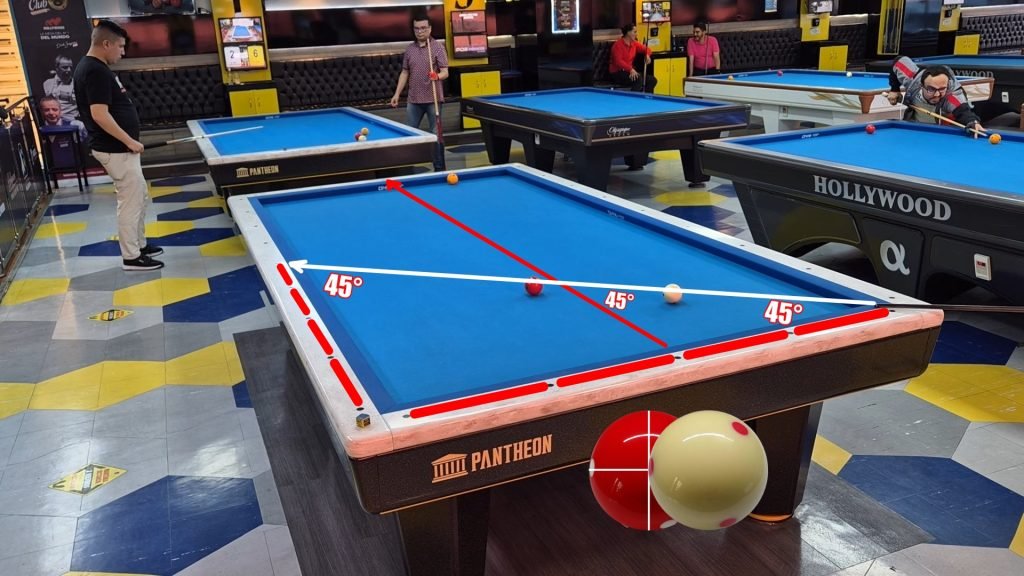
In the position you see on the screen, that triangle confirms that I should hit half a ball.
And what do I gain from that?
That my ball goes straight towards the short rail.
And if I also play with maximum spin, I can perform the five-cushion shot that the position requires.
That’s the beauty of understanding why.
A small detail in the angle completely changes the safety of the carom shot.
It took me years to learn this at the table, and today I’m saving you the trouble in just a few minutes.
The Mistake That the Half Ball Hit Does Forgive
Look at this position. Again, a triangle with equal straight sides. Again, a half-ball hit and maximum spin.
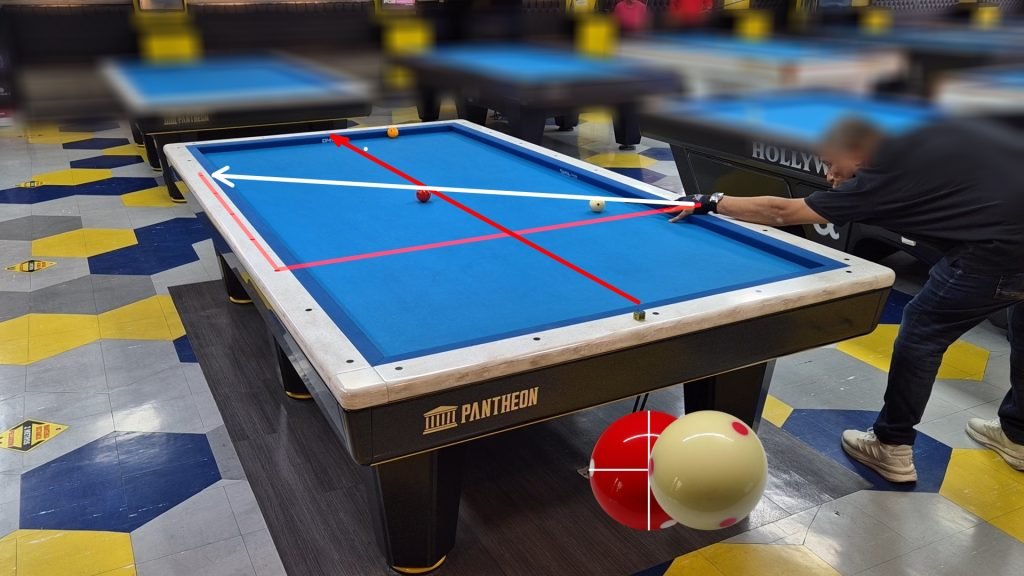
But this time I want to show you something different.
In this shot, we made a mistake with the ball hit. Instead of hitting exactly four-eighths, we hit five, a little more than a half-ball. A real, measurable, visible error.
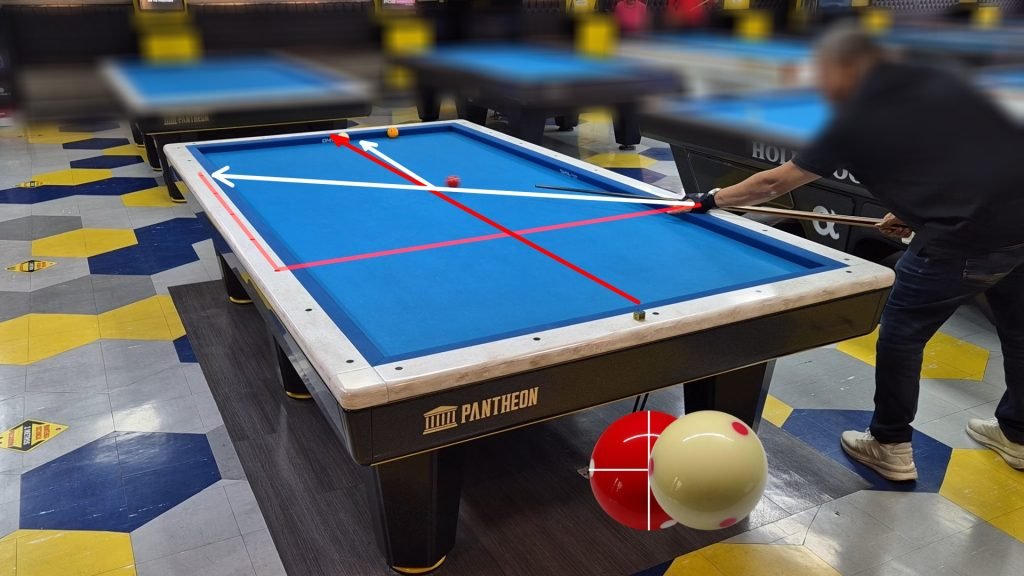
And you know what happened? The shot was ok anyway.
When you have a choice, choose the option that gives you the most margin.
Because in competition, the one who never makes a mistake doesn’t win.
The winner is the one who knows how to choose the option that best forgives their mistake.
And the half-ball hit, many times, is that hidden option that saves the game.
Now you don’t just know it in theory. You just saw it on the table.
The Key Condition of the Ball Hit
One more position. Same triangle, equal straight sides. Half-ball hit, maximum spin. You already recognize the position and the pattern.
But there’s one detail you can’t overlook.
For this 45-degree rule and the half-ball hit to work, my ball must make contact with the object ball without any vertical spin.
That is, without draw spin, without running spin.
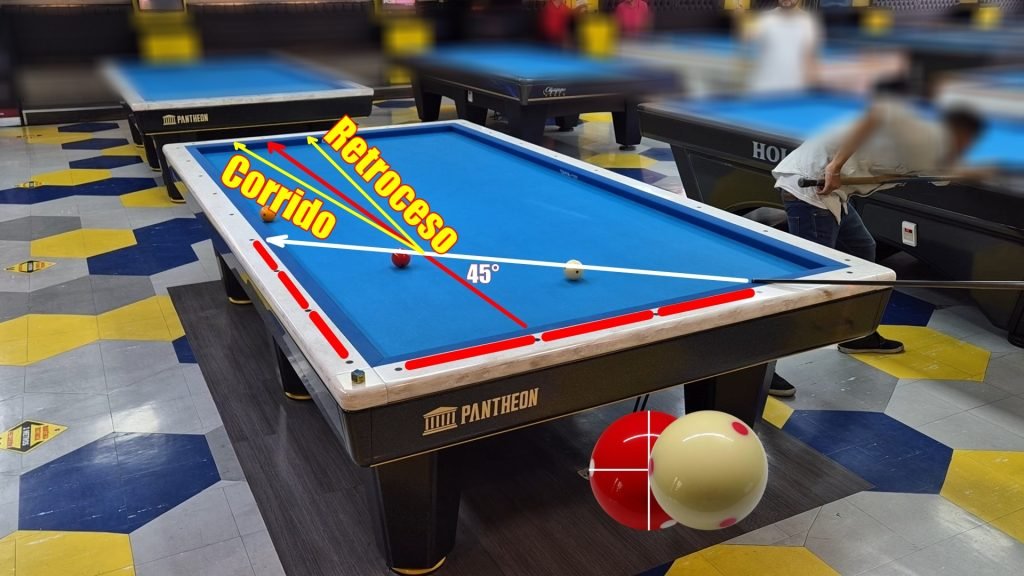
Why? Because the vertical spin alters the trajectory after contact. If your ball arrives with backspin or running spin, the exit tangent changes.
The Measure That Converts the Angle into a Ball Hit
So far we’ve talked about angles and triangles. Clear concepts, but still a bit abstract.
Now we are going to take a key step.
A 45-degree angle always has an opening of 4 diamonds when the shooting line, or the exit tangent, goes from long rail to long rail.
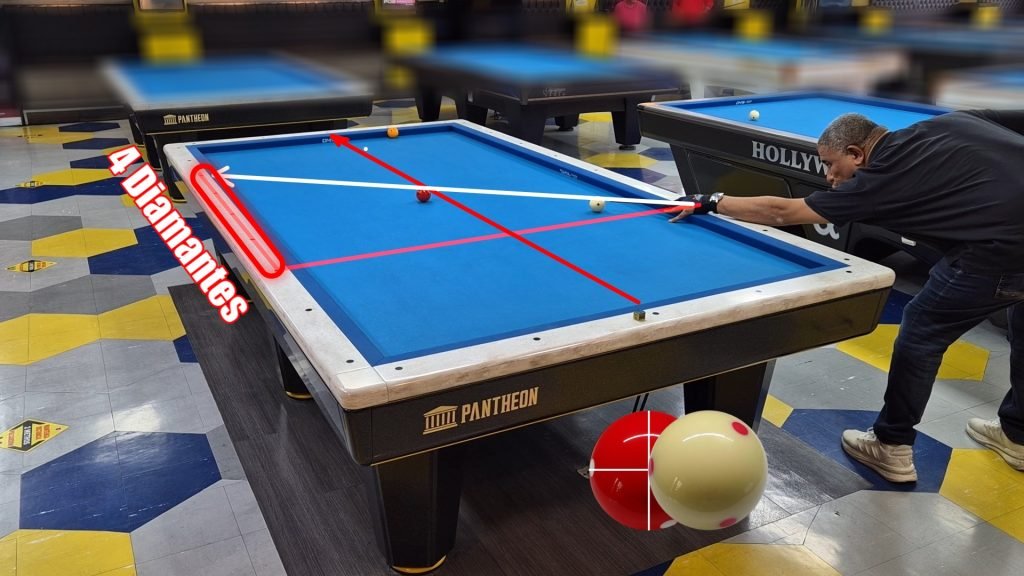
The diamond opening is the distance that allows me to read the angle more clearly and accurately.
Do you realize what just happened?
The angle ceased to be a feeling… and became a visible, measurable reference.
If you already know that four diamonds of opening equal 45 degrees and half a ball hit , then you have a fixed reference point from which to measure everything else. Two diamonds of opening, three, five, six, each corresponds to a different angle and therefore a different ball hit.
The Zero Opening: When the Ball Goes Perpendicular
Now I want you to look at a detail that seems simple, but is fundamental.
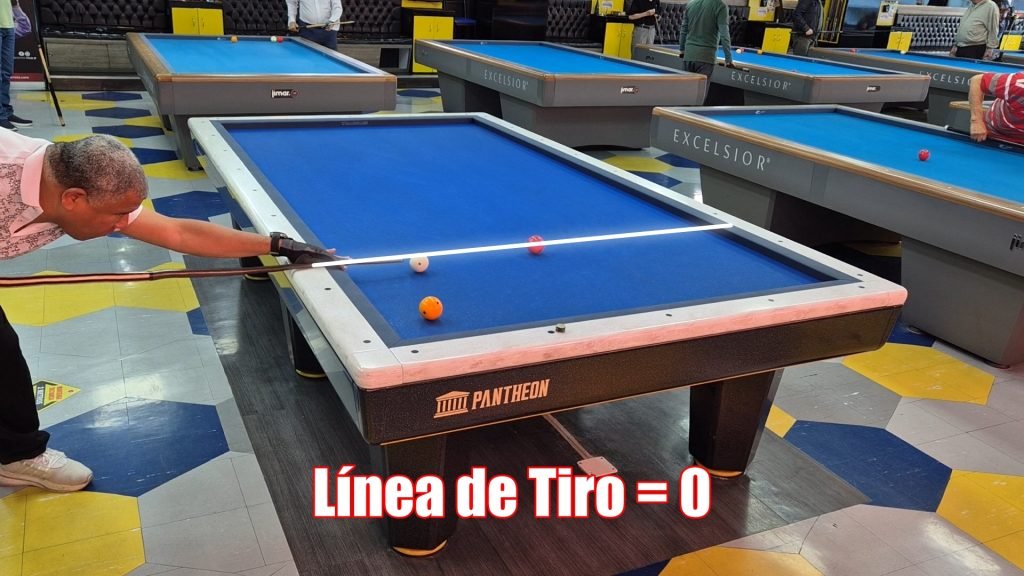
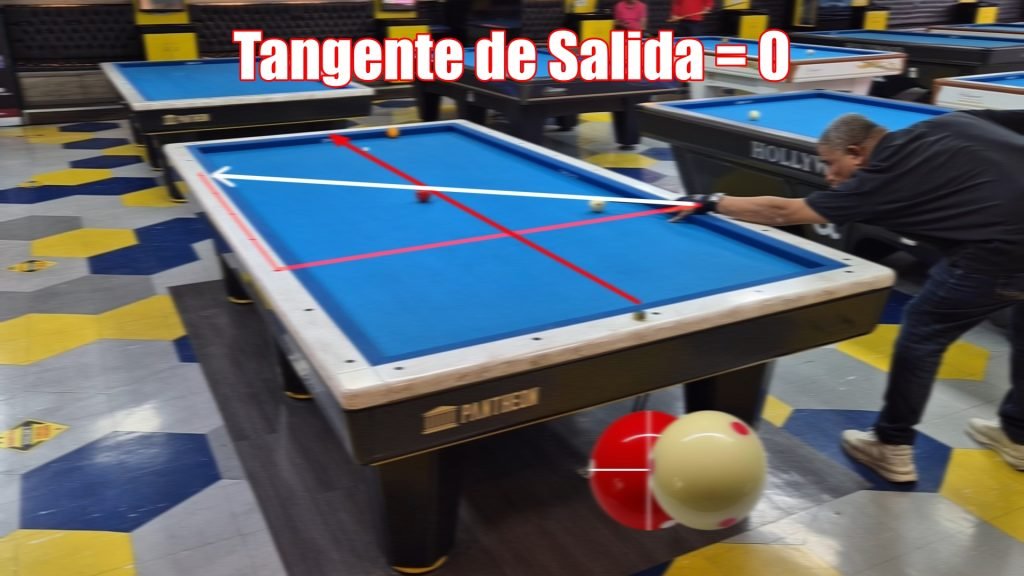
When the shot line, or the exit tangent, is perpendicular to the first rail, that is, when it goes straight towards the first rail, its opening is zero.
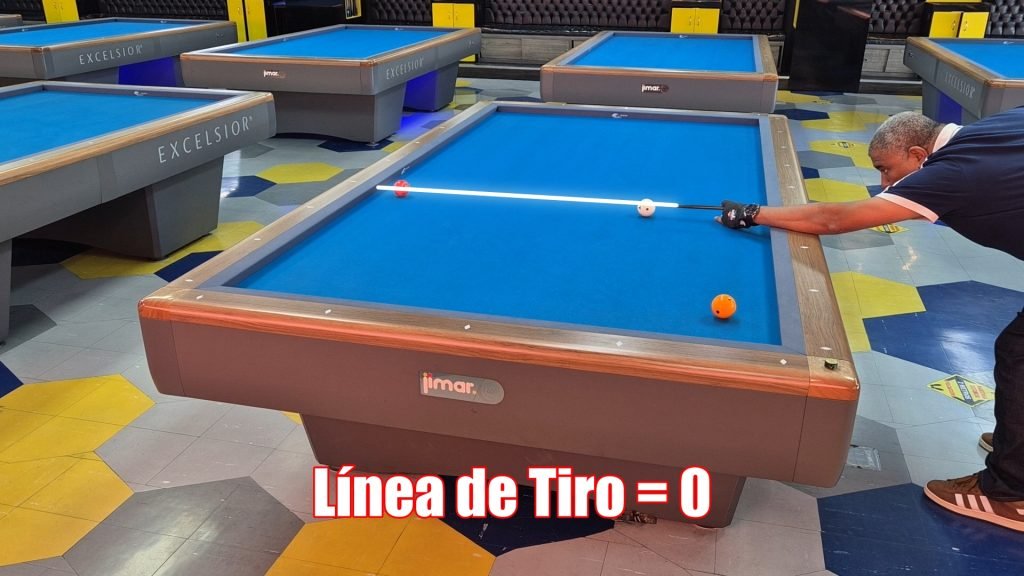
Why zero?
Because there is no inclination to one side or the other.
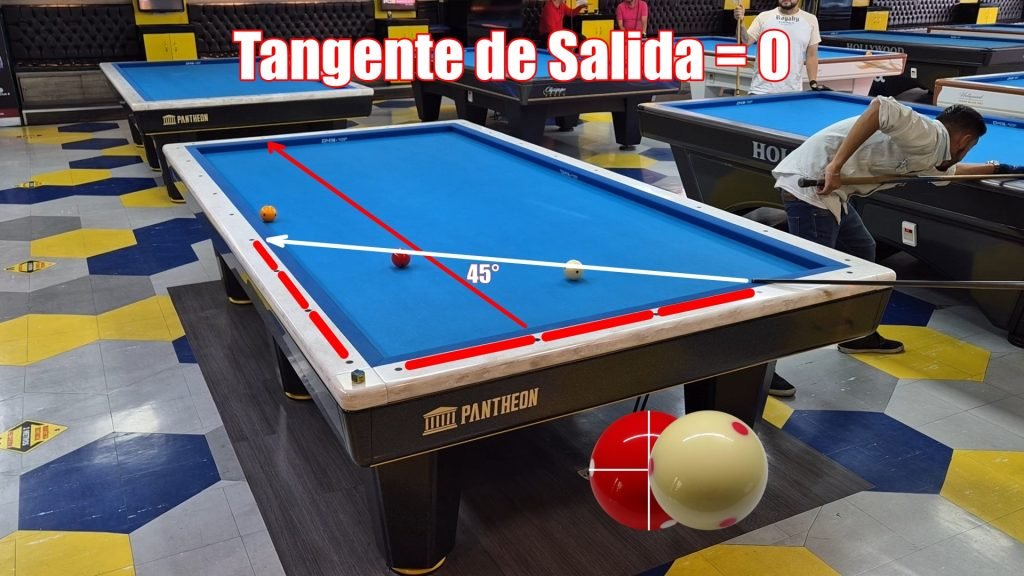
Do you remember the examples with the triangles we saw earlier?
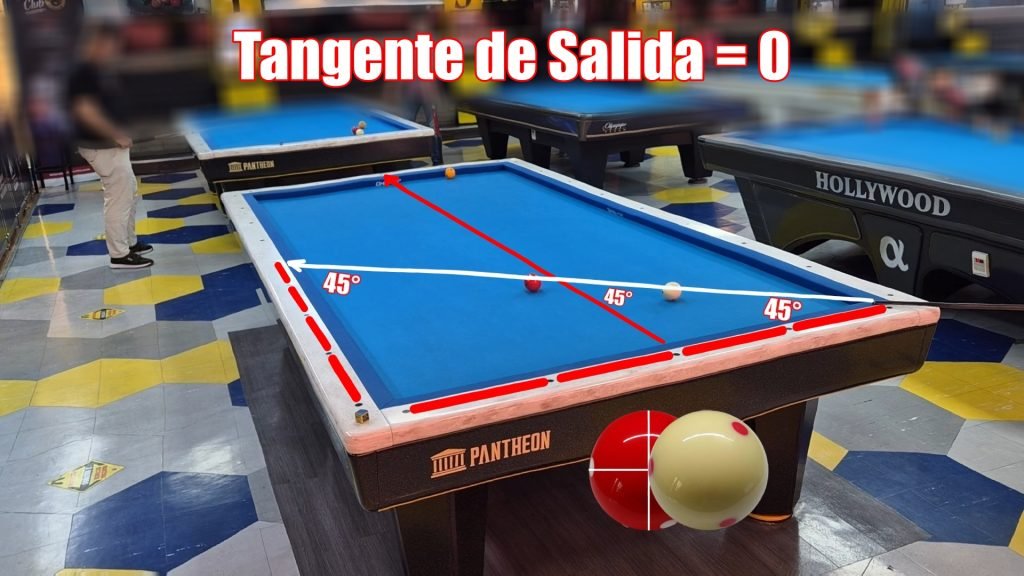
In those positions, after contact, my ball would go perpendicular towards the short rail.
“Zero” Ball Hit
Now I want you to look at a very special case.
When the shot line and the exit tangent are almost equal, it means that my ball, after touching the object ball, should change its trajectory very little.
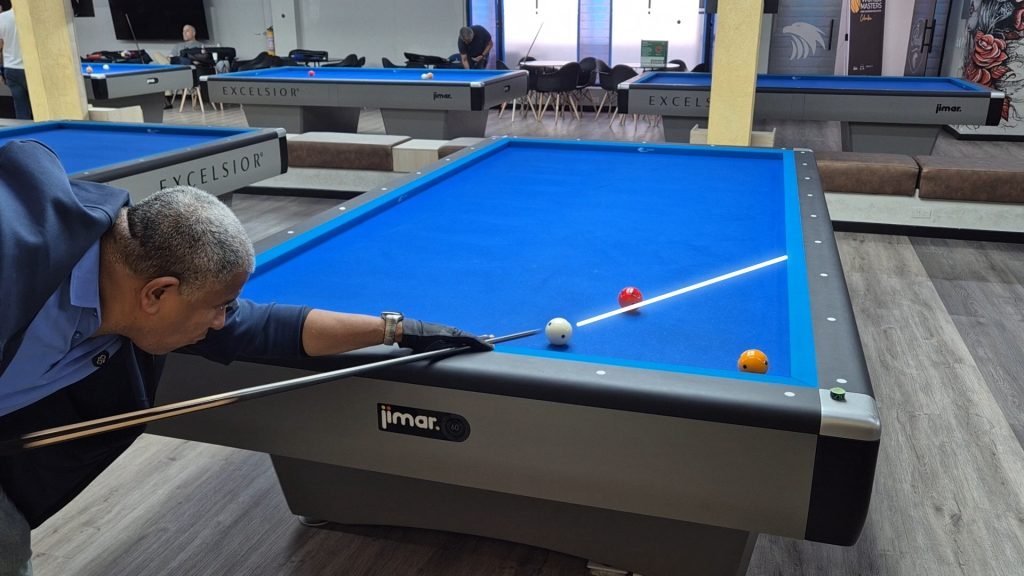
It’s an extreme case. A case where the shot line and the exit tangent are almost identical.
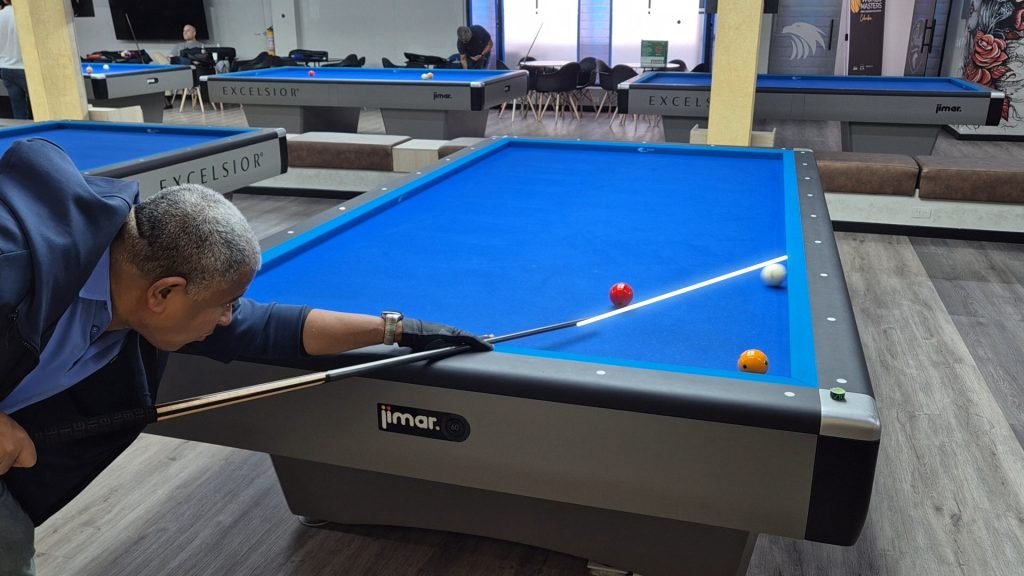
This shot is known as a “fine ball hit” or “hair ball hit” shot. And it’s exactly what its name suggests: a contact so delicate, so close to the edge, that one millimeter less and there’s no contact. One millimeter more and it’s no longer a fine shot, it’s a completely different shot.
It’s the most intimidating shot. And also, when it works, the most satisfying.
Has it ever happened to you that you barely wanted to touch the ball… and ended up hitting too much of it?
That is precisely the challenge.
Hair ball hit is not played with intention alone.
It’s played with technique and sensitivity.
The Secret Formula of Ball Hit
Now we’ve reached the point that many players have been seeking for years.
The secret formula for the ball hit.
Starting from the shot line and the exit tangent, we can begin to determine how much ball we should hit.
Not by divination.
Not just because of the feeling.
Instead, by reading the difference between the direction my ball comes into contact with and the direction it should come out with after touching the object ball.
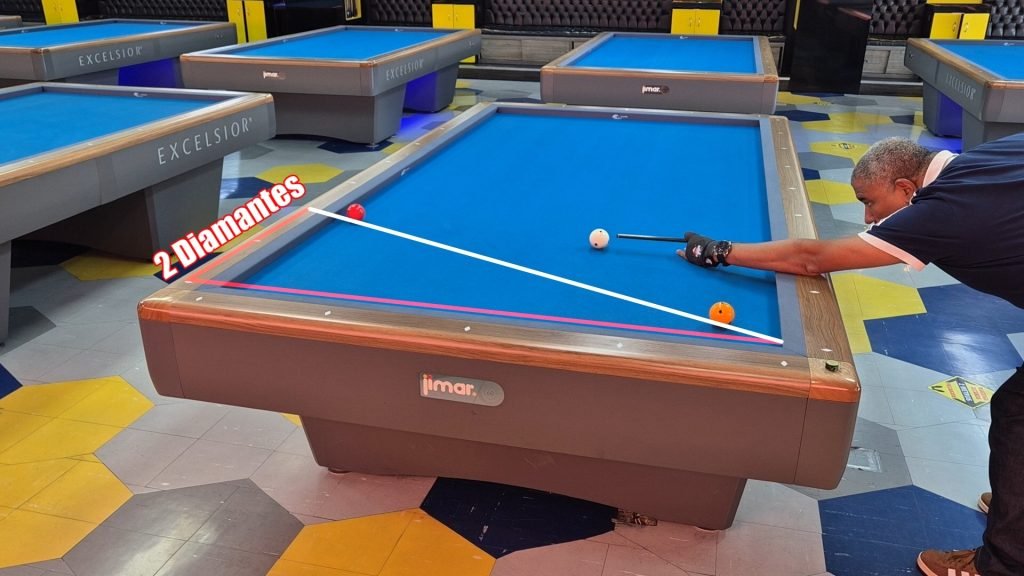
Can you imagine being able to look at a position and understand if the shot requires half a ball, a third, a quarter, or a hair of a ball hit?
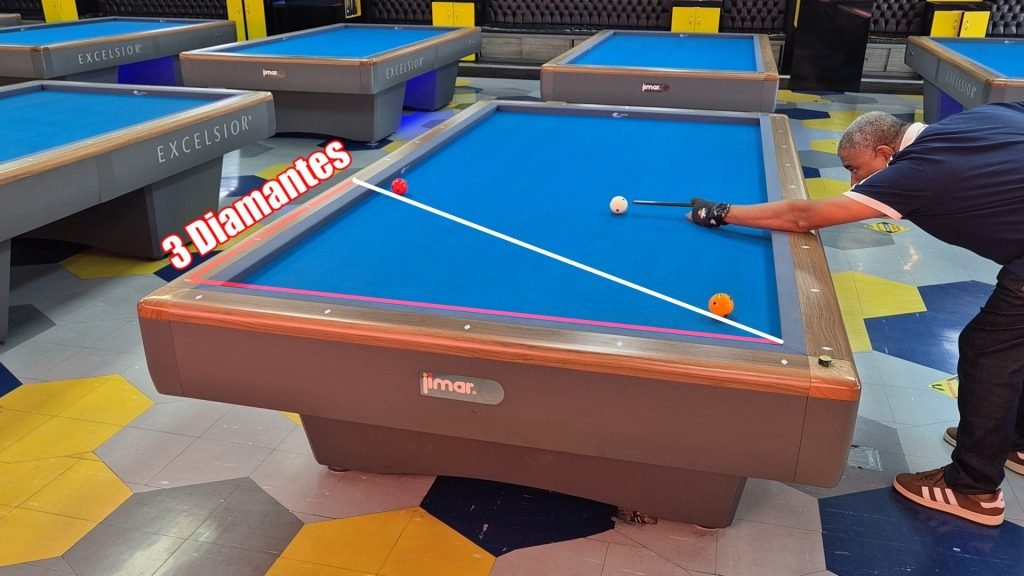
That’s exactly what we’re going to reveal.
And something very important: how to combine that calculation with the effect, because the effect can modify the trajectory.
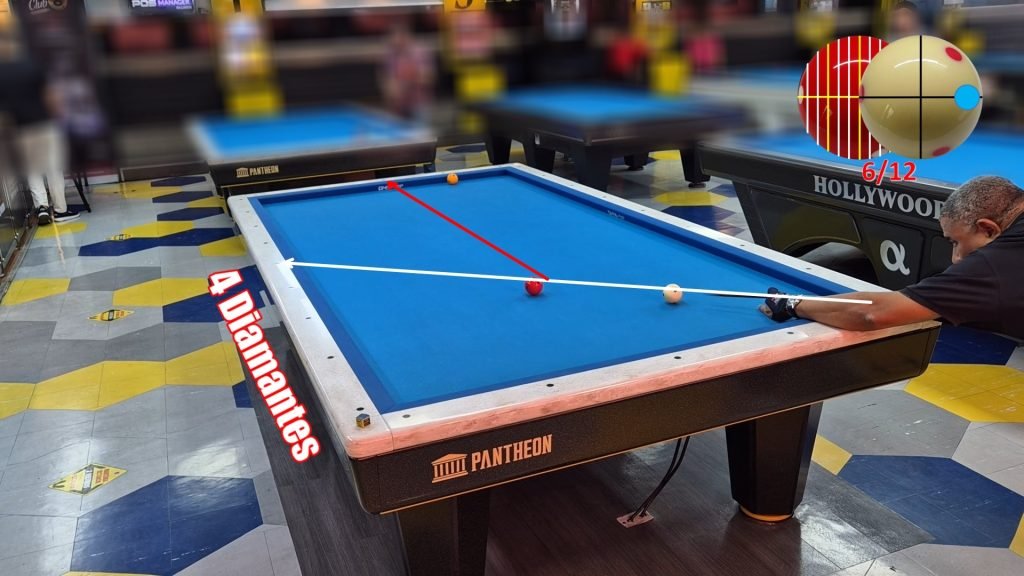
But this part is special.
This section is only available to members of Maestro del Billar.
If you want access to this formula and all our PREMIUM content, support us and join Maestro del Billar.