
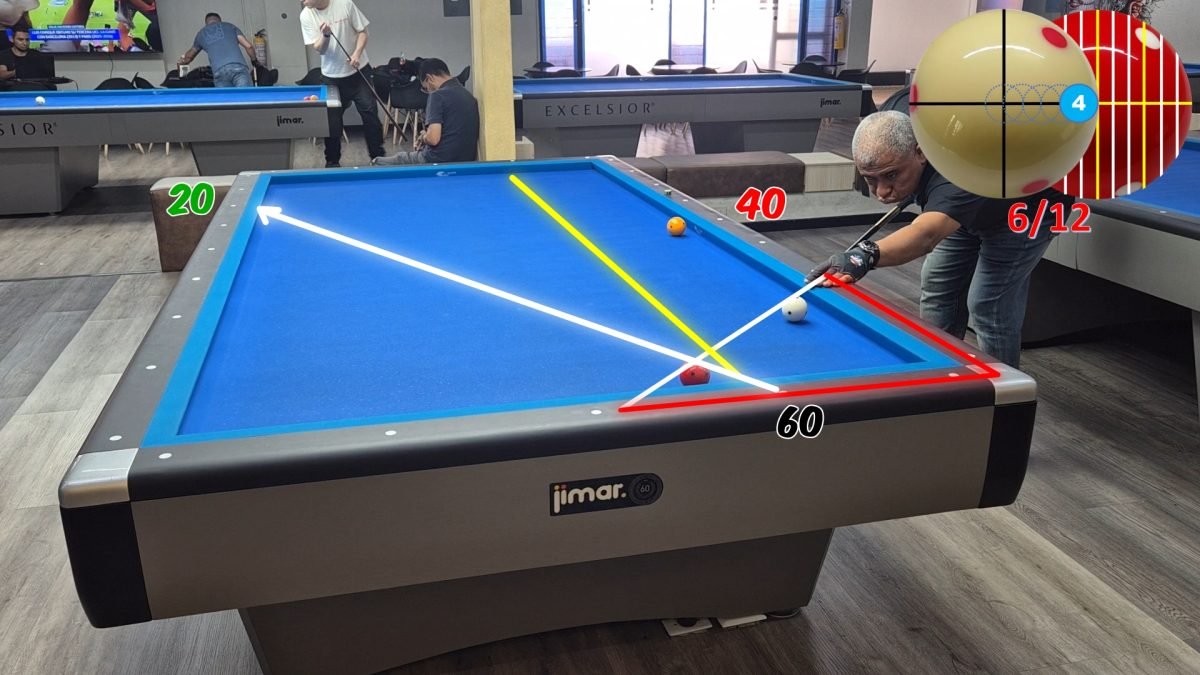
Did you know that most caroms in three-cushion billiards can be solved by mastering just two concepts?
The english and the ball hit.
It seems simple, but here’s the problem: many players know the english, but still choose the ball hit by intuition.
Other shots, such as the previous bank shot, changes of effect, rotations or repetitions, usually require more special stroke and resources.
We already studied the effect in Key #2 of our series The 7 Keys to Three-Cushion Billiards
But the ball-hitting is another level.
It is the central theme of the last three keys and what separates the player who improvises from the player who truly understands the table.
Today you will learn Key #6: The exit tangent and its complement, the opening of the path .
I will teach you how these two concepts help you to define the ball hit more precisely.
And pay close attention, because we are the only ones who develop this topic with a high level of detail and depth.
After reading this, you’ll start to see every shot in a different way.
Let’s watch the promotional video Key #6: Exit Tangent
The video with ALL the SECRETS is only available to members. Join Billiards Master and access exclusive PREMIUM content for Members.
I am the “Billiards Master”, and I am passionate about playing, researching and sharing knowledge about three-cushion billiards.
The Reference that Turns the Trajectory into a Ball Hit
In Key #5 we saw a powerful idea: the ball take is calculated as the difference between the shot line and the exit tangent.
And what does that result give us? An opening, measured in diamonds, that tells you exactly how much ball you should hit if you play without spin.
Now, in Key #1 we saw the halves system and the importance of mastering the corners of the table. Because many caroms originate from there.
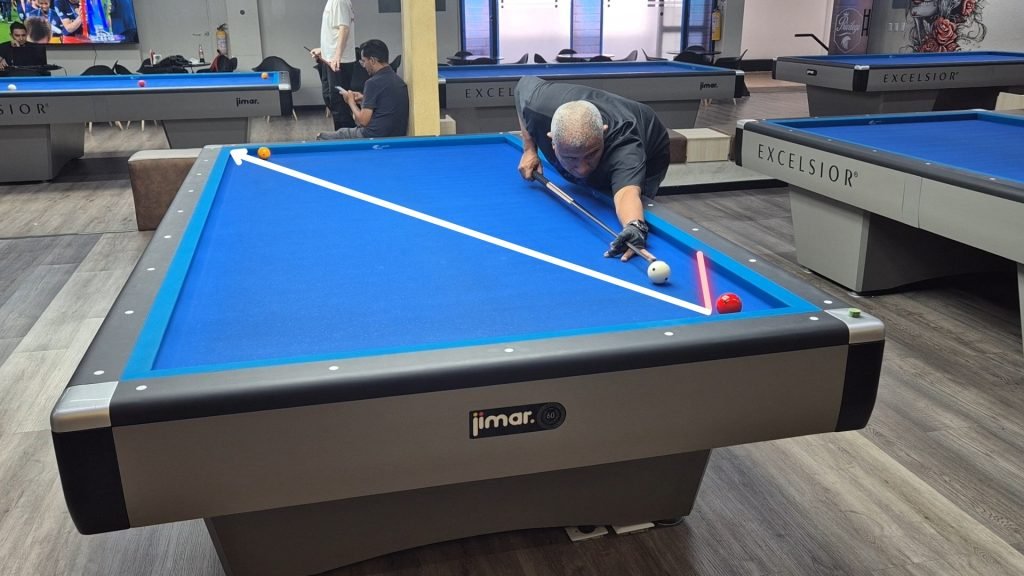
Exit Tangent and Trajectory Opening
Look at the position on the screen. Using the halves system, those white lines lead you directly to the corner and solve the shot.
You already know the first part of that path: it’s the exit tangent. Having it identified is already an advantage; it gives you a clear reference point for where your ball is headed.
But today we’re going a step further. Today I’ll show you how to know, with precision, the exact ball hit and spin for these types of shots.
The Secret of the Same Opening in Two Scales
And now comes something that seems like magic, but is pure geometry.
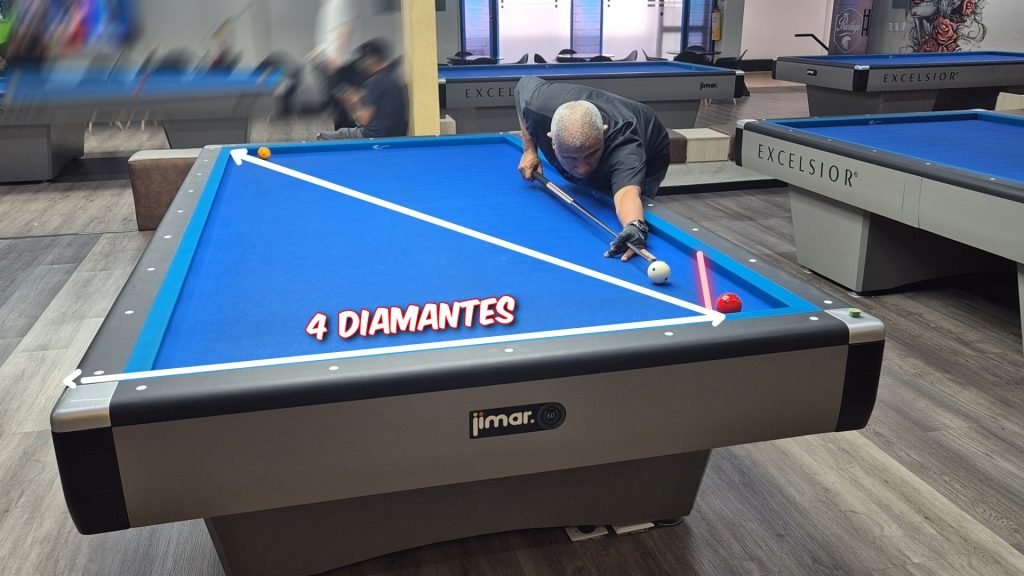
What if I told you that this position is equivalent to this other one? Although the scale changes, the angle is the same.
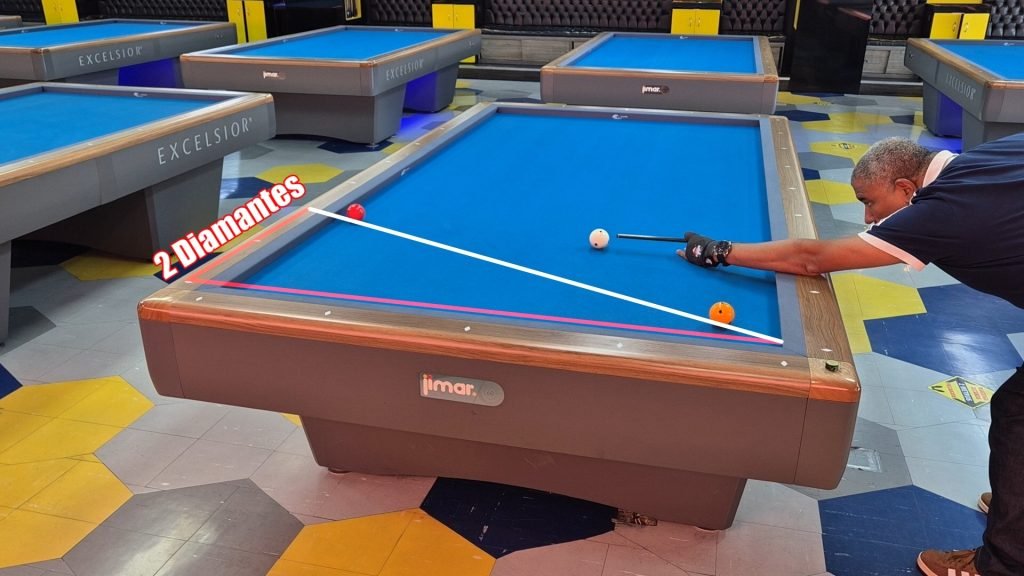
And in three-cushion billiards, when the angle is preserved, the decision is also preserved.
Remember this rule: an opening of two diamonds measured on the long rail corresponds to a ball hit of 2/12 . Two twelfths is a little less than a quarter of a ball . It seems small, but that tiny contact can define the entire carom.
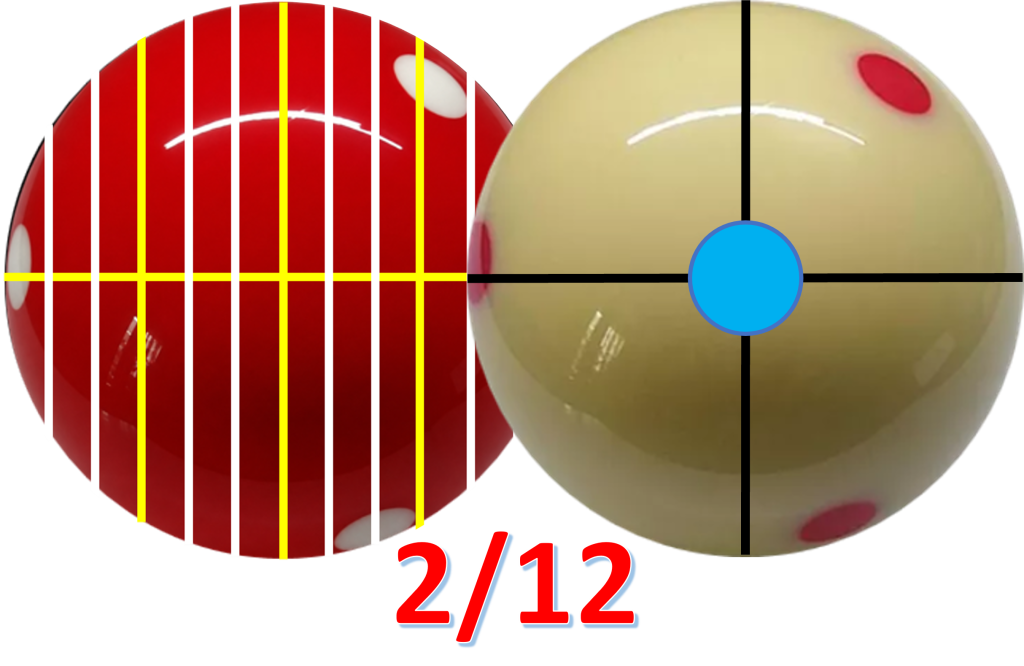
Do you see why simply looking at the table intuitively isn’t enough? That same opening of two diamonds on the long cushion is equivalent to four diamonds measured on the short cushion. The ratio is always 1 to 2. The short cushion is half the size, which is why the opening appears twice as large there. But the angle, which is what’s important, remains the same.
And when you understand this, you stop getting confused by the size of the table and start reading the ball’s true trajectory. One same principle. Two ways to measure it. One single correct decision.
Base 50: The Shortcut to Solving Difficult Arrivals
Now we come to a part that many players feel is like a wall.
Fourth-rail arrival . Has it ever happened to you that the shot looks clear at the beginning, but falls apart at the end? This is where a game-changing ally comes in: the 50-base system.
It works like this. First, I determine the value of the arrival zone . In this case, that zone is between approximately 50 and 70.
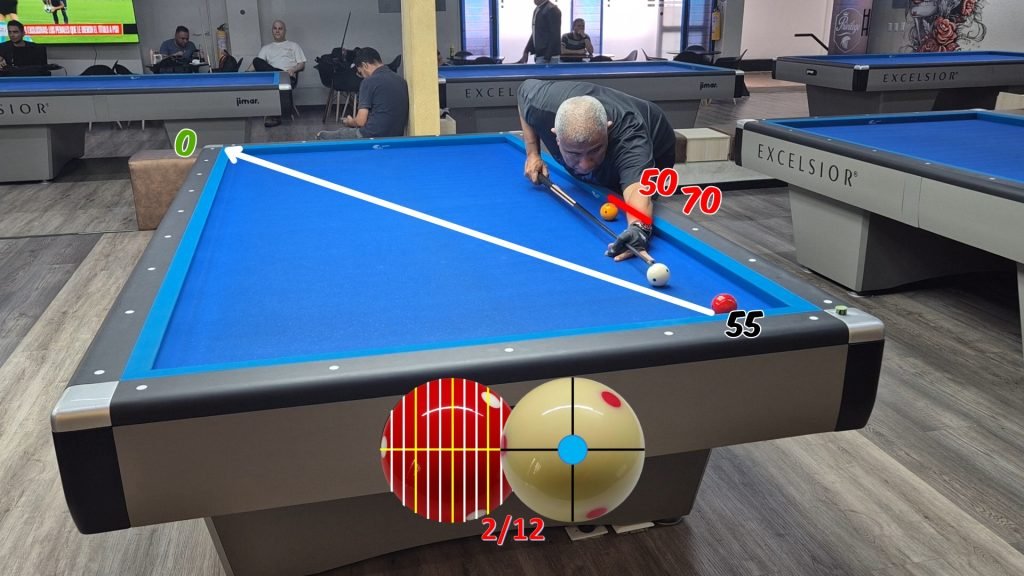
Then I look for a trajectory from the first to the second rail that will take me to the landing zone. The first rail gives me the starting value and the second rail gives me the target value.
In this position, that trajectory goes from the starting value 55 to the target value 0.
Thus, what seemed a complex situation begins to make sense. The table is no longer a puzzle. And the fourth rail is no longer a mystery. And when you master this, you begin to see paths that previously seemed hidden.
When the Triangle Tells You How to Play Carom Billiards
Look closely at the position on the screen. Do you see that triangle that forms the shot line? It has something special: its straight sides are equal. And that’s pure information.
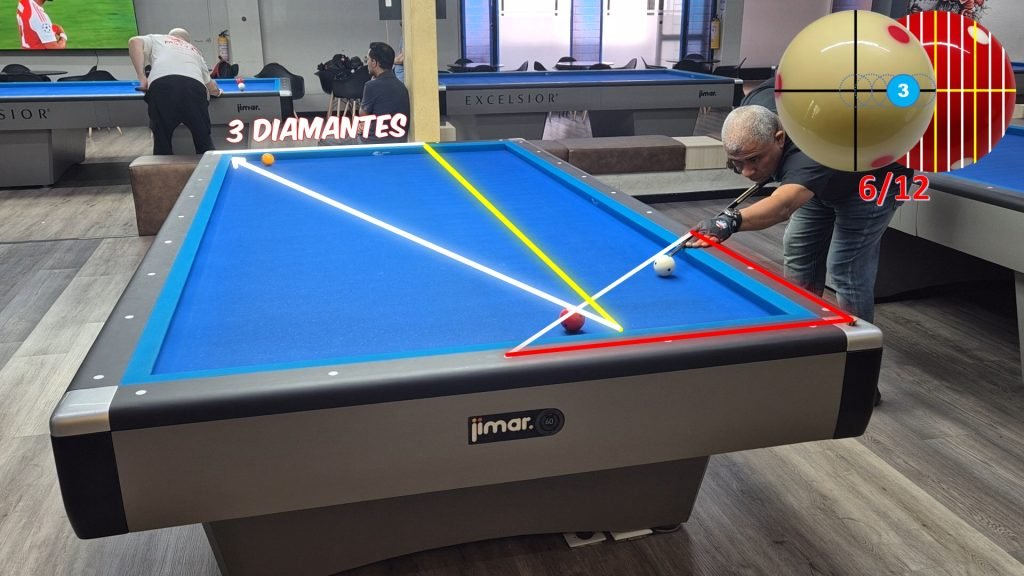
What does that triangle tell us? Something we’ve already seen throughout these seven key points: if we hit a half-ball and play without spin, our ball goes perpendicular to the first rail. Perpendicular, straight ahead.
But here we don’t just want to go perpendicularly. We want to reach the corner and complete the carom. So what do we do? We hit that same half-ball, but we play it with a three-point spin. That spin is what allows us to cover the three opening diamonds and turn around in the corner, where the carom awaits us.
Do you see what’s important? I’m not guessing. I’m reading the triangle, confirming the ball hit, and using the exact spin to get the ball to the spot I need.
That’s true control: when the table shows you the answer and you know how to read it.
Ball Hit and Spin Shot to Enter the Trajectory
We have another example on screen. And this time, thanks to the base 50 system, we know something key: if we manage to get our ball into the path marked by that white line, the carom shot is complete.
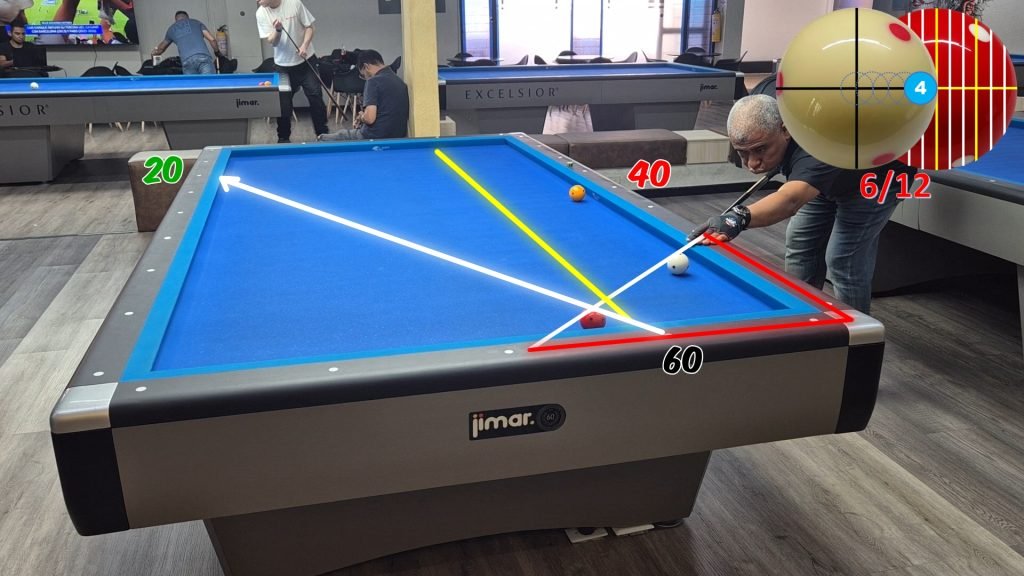
So the question is the same as always: what ball hit and what spin do I need to get in that exact trajectory? First, you have to measure the angle.
And how do we measure it? Here we rely on a tool we saw in Key #4: parallel lines . With them, we confirm that we are dealing with a four-diamond opening.
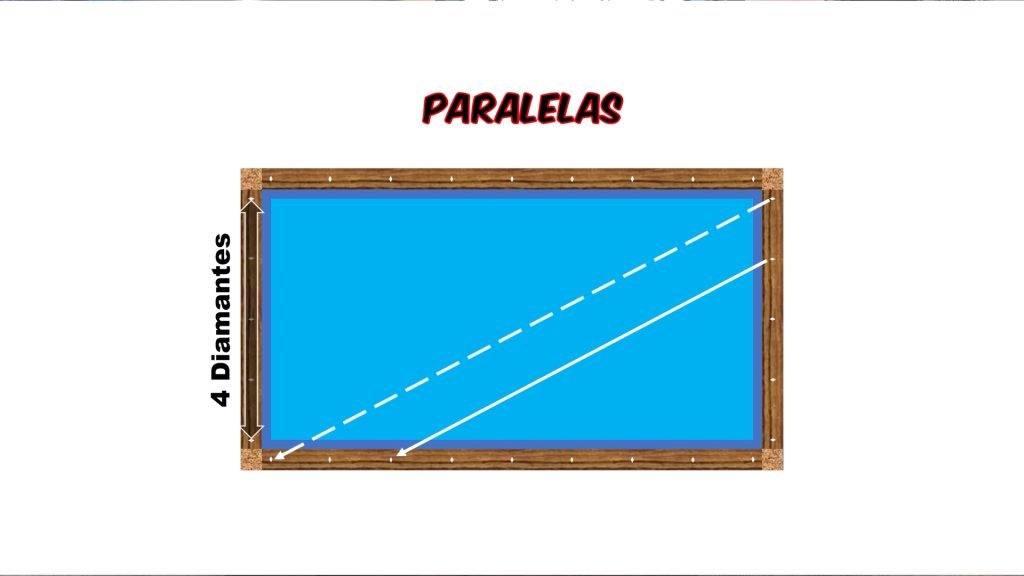
Does this sound familiar? It’s the same pattern as the previous example. We cover those four diamonds by hitting a half ball and playing with spin four.
But remember the reason for that half-ball. It’s not random. We chose it because the shooting line again forms that triangle with equal straight sides that we identified earlier. When that triangle appears, a half-ball with no spin gives you the perpendicular path, and from there the spin does the rest.
Do you see how each key connects with the others?
The Rule That Allows You to Adjust Ball Hit and Spin
After seeing the two previous examples, you probably had a question: am I obligated to always hit half a ball and play with those exact effects? You’ll be happy to know the answer: no.
And here’s a very powerful adjustment rule: (EXCLUSIVE content for MEMBERS)
Do you see how the method begins to give you freedom?
That’s the great advantage of this method. It doesn’t force me into a single solution. It allows me to adjust the ball hit and spin depending on the position, the table, and my confidence in the shot.
When the Third Ball Moves Away From The Corner
So far we’ve worked with positions where everything seems to fall into place easily. But real billiards doesn’t always cooperate.
What happens when the third ball moves away from the corner, even though it’s still close to the short rail? We don’t improvise here. We follow a two-step process, and you already know both of them.
First, we look for the ball hit that will take us directly to the corner. In this position, that hit is three-twelfths of a ball, which is the same as a quarter of a ball . Nothing new so far, right?
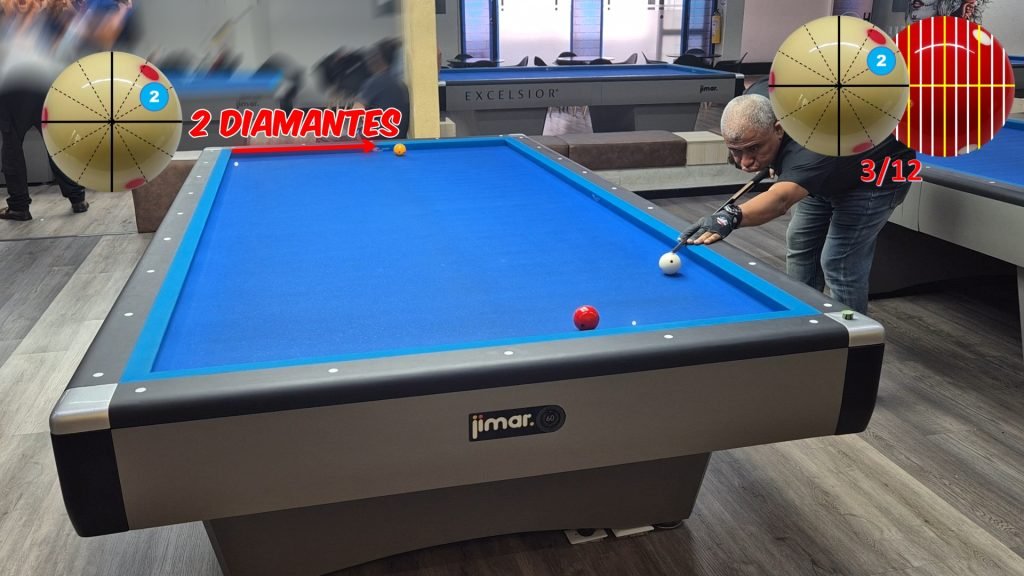
The second step is what makes the difference. Now we have to cover the distance between the corner and the third ball. In this case, it’s two diamonds. And how do we cover that exact distance? With a two-o’clock spin, applying what we already learned in Key #2: spin.
Do you see how each key we’ve seen becomes a piece you need to solve the whole picture?
The Mirror That Turns a Difficult Ball Hit into a Controllable Shot
We know that from this position, hitting 2/12 of the ball, we can turn around the corner. With a one-o’clock spin , we would reach the third ball. The shot is there, calculated, solved.
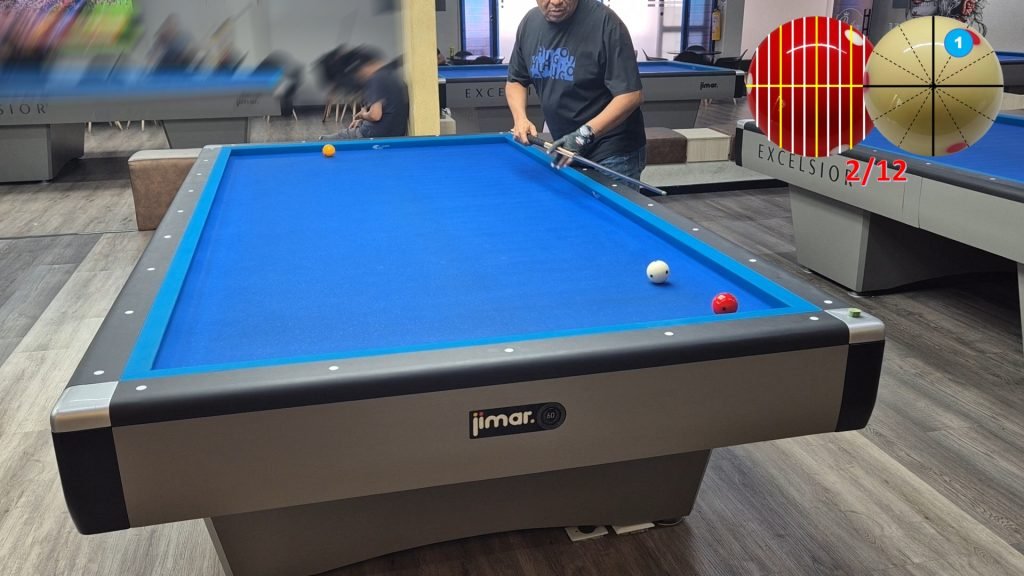
But there’s a problem. A 2/12 ball hit is a very small, very delicate shot.
What if you could hit more ball and simplify the shot?
This is where Key #3 comes in : the mirror . What it does is reflect the position of third ball, and from that reflection, calculate the trajectory opening much more easily.
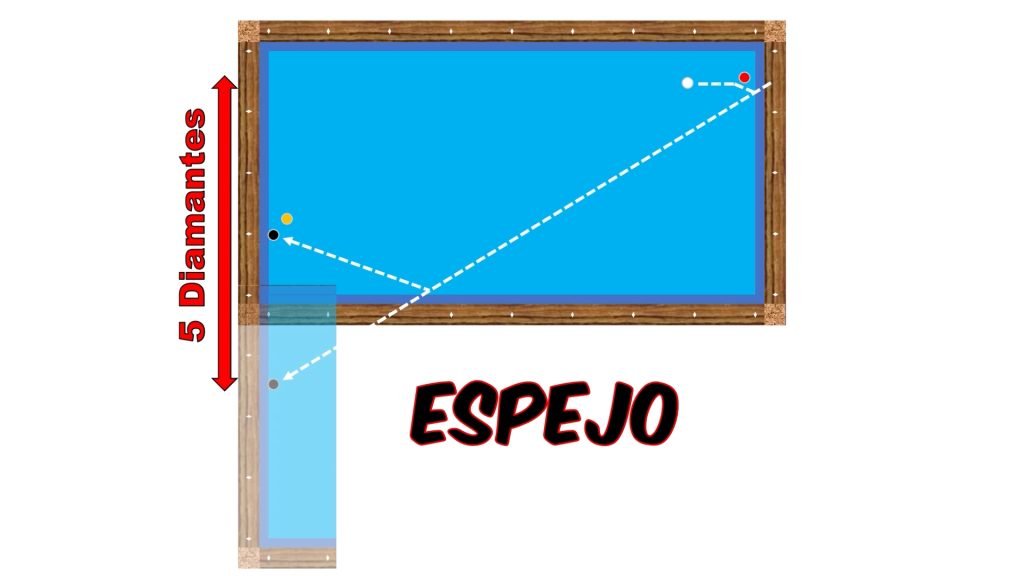
Let’s apply the mirror rules. The reflected ball is one and a half diamonds from the corner . Second ball is three and a half diamonds away. Add those two distances together and you get a total opening of five diamonds, measured on the short rail .
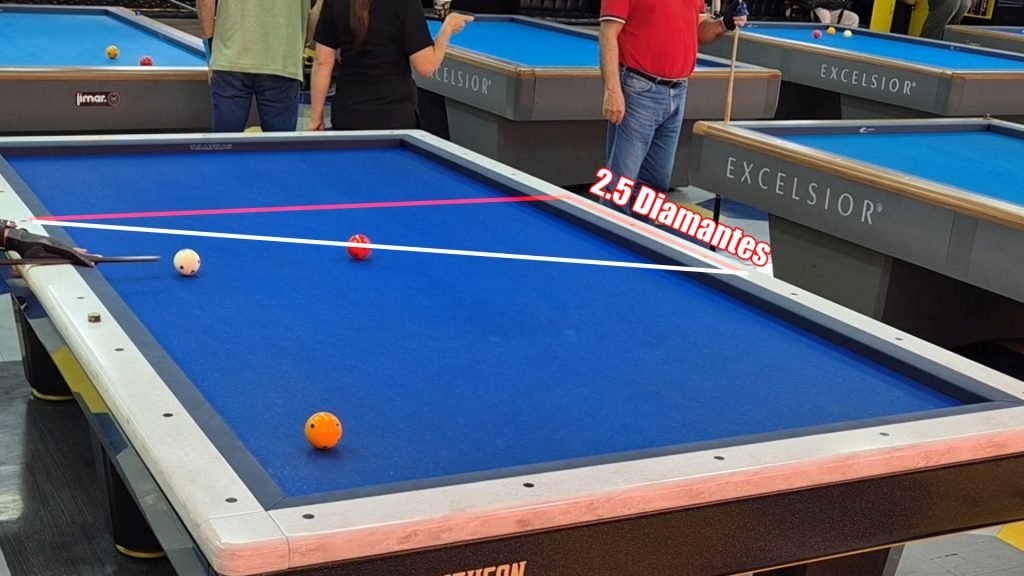
Do you remember the one-to-two ratio between the short rail and the long rail? Five diamonds on the short rail are equivalent to two and a half on the long rail.
And now look at what the ball-hitting formula tells us: we can play without spin and hit (EXCLUSIVE content for MEMBERS)
No spin. More ball hit. More control. The most powerful thing is this: there are several positions that look different on the table, but they all share that same two-and-a-half-diamond opening. And they all play out the same way.
Seven keys , many moves. That’s how the method works.